
Pickleball sublimation jerseys place dye inside compatible polyester fibers rather than adding a heavy layer on top. The printed design has no surface film to crack or peel, but fabric, ink, heat control, sewing and care still determine the finished garment’s useful life.
How Pickleball Sublimation Jerseys Are Printed
Here’s what happens in a factory, step by step, because understanding this will save you from buying something that looks great in a photo and falls apart in a washing machine.
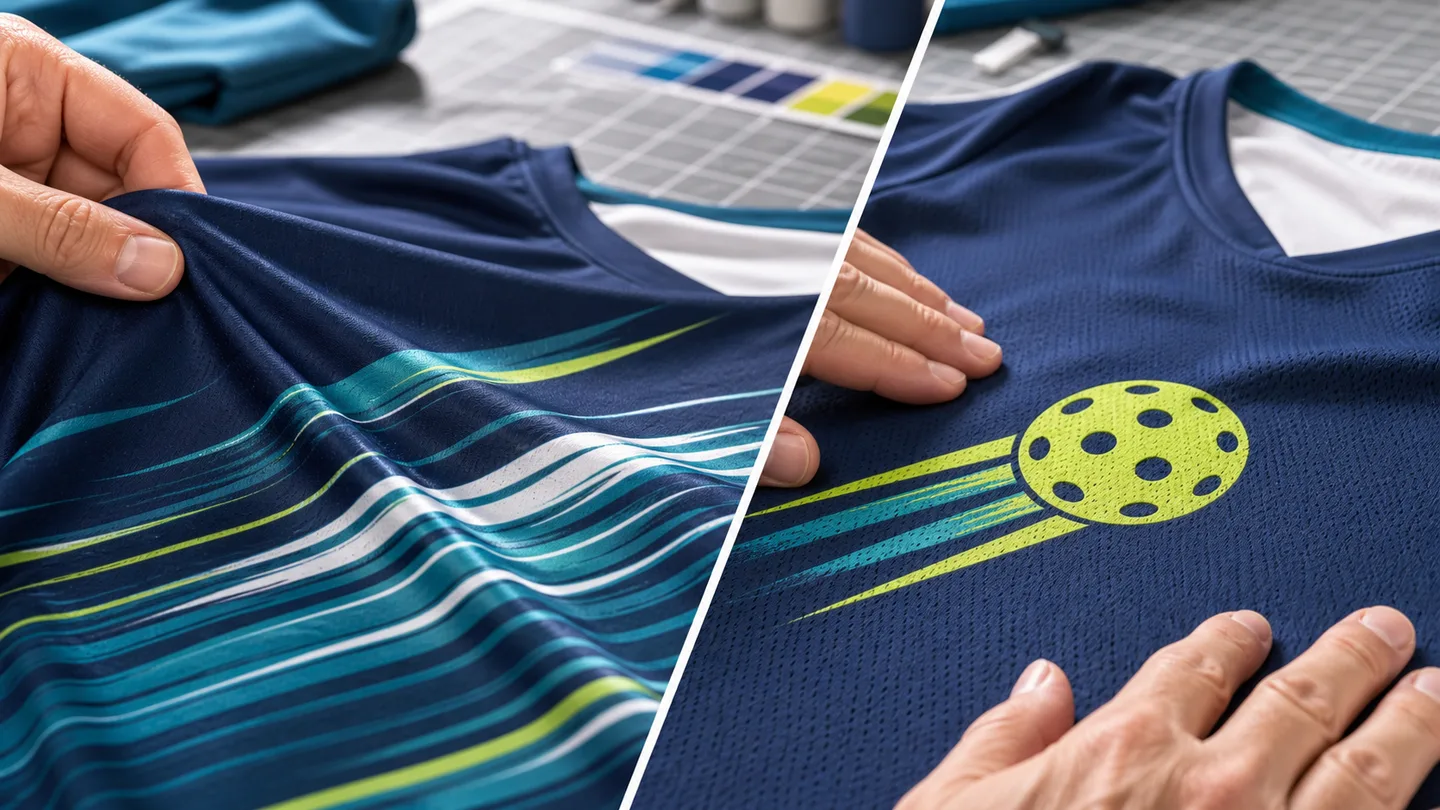
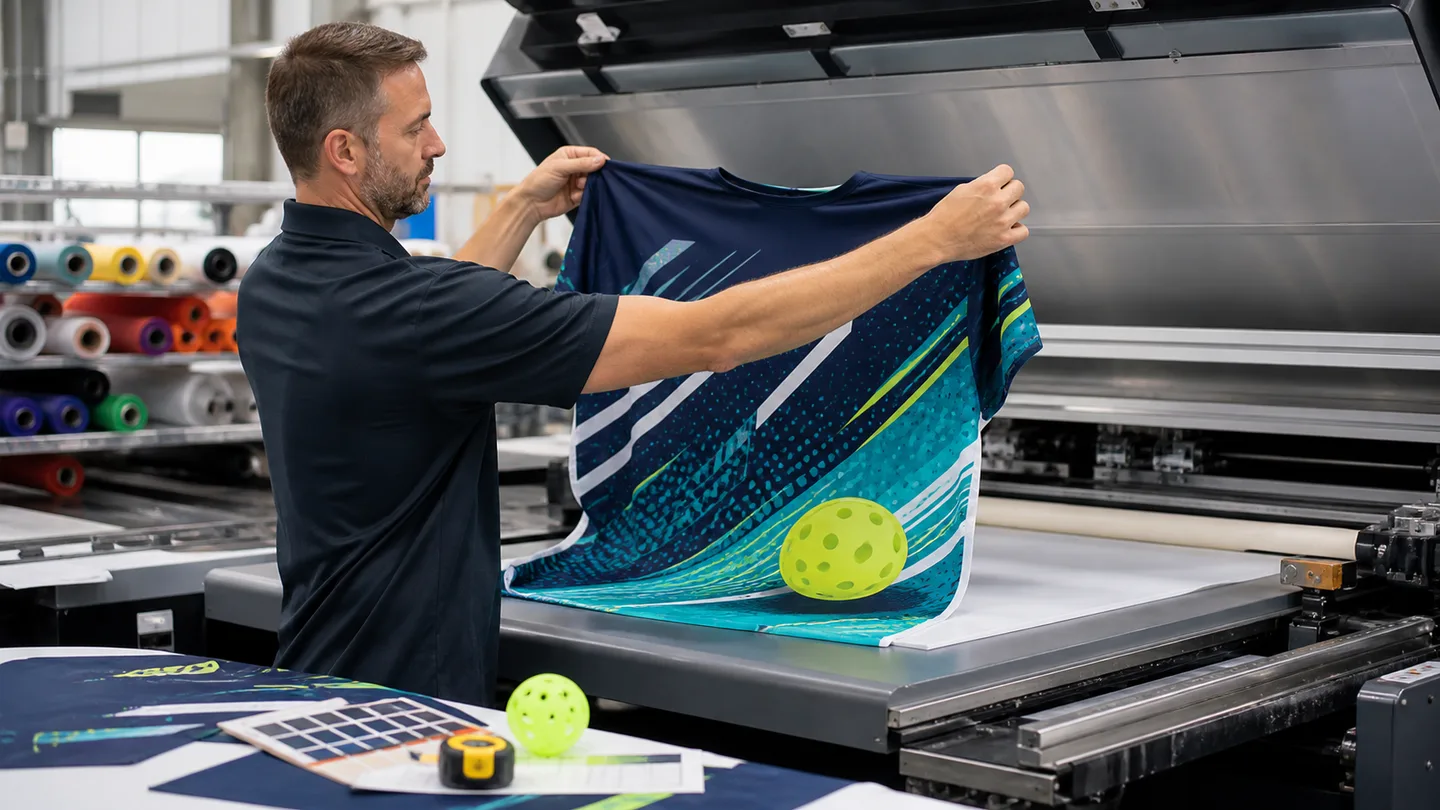
First, the artwork gets printed onto transfer paper using special sublimation inks. The paper is then placed against a white polyester fabric and run through a heat press at high temperature. At that heat, the ink turns from a solid straight into a gas. That gas penetrates the polyester fibers, then cools and turns solid again – inside the thread, not on it. When the press opens, the paper peels away and the fabric itself is now dyed with your design.
That last detail is the whole ballgame. Dye that lives inside the fiber doesn’t form a layer on top, so there’s no layer to crack, peel, or flake. You can’t scratch it off with a fingernail. It doesn’t add stiffness to the shirt the way a thick screen print does. And because the color is part of the fabric, it breathes with the fabric.
One thing to know up front: sublimation dye bonds to polyester, not cotton. It can color the polyester portion of a blend, but the untreated fibers leave a softer, heathered result. That is why crisp, full-color team jerseys usually use a compatible high-polyester fabric, sometimes with elastane added for stretch.
Sublimation vs Screen Print vs Vinyl: What Holds Up?
Pickleball puts a shirt through a lot. Sweat, sun, friction from a bag strap, repeated washing after every session. Here’s how the three main decoration methods handle that.
| Method | How it’s applied | Durability | Feel | Best for |
|---|---|---|---|---|
| Sublimation | Dye gas bonds into polyester fiber | No surface layer to crack or peel; color can still shift with UV, heat and wear | No added print hand | All-over designs and multi-color team programs |
| Screen print | Ink pressed on top of the fabric | Good for simple logos, but can crack over time, especially thick prints | Slight raised texture | Small logos, spot colors, cotton blends |
| Heat-transfer vinyl | Cut vinyl pressed onto the surface | Peels at the edges after enough washes | Noticeably stiff, can trap heat | Names and numbers on a handful of shirts |
Screen print and vinyl place material on top of the garment, so their possible failure modes include cracking or edge lift. Sublimation has no comparable surface layer, but color can still lose vibrancy through prolonged ultraviolet exposure, unsuitable chemistry or repeated high-temperature care. The garment fabric, seams and trims also continue to age even when the print remains intact.
The other big advantage for teams is the design freedom. With screen print, every color you add is another screen, another setup cost, another fee. With sublimation, a design with ten colors costs the same as a design with two. You can print a full-bleed pattern – gradients, photos, sponsor logos scattered across the chest and back – with no extra charge for complexity. That’s why tournament jerseys look the way they do.
What Determines Sublimation Jersey Durability
Sublimation describes a method, not a single quality level. Two shirts can look similar on day one and age differently because of the material and process controls below.
Fabric weight and quality. Thin, loosely knit polyester prints fine but wears through faster and feels flimsy. A decent jersey fabric has enough weight to drape well and survive a season of snags and pulls. Ask the factory what fabric they run.
Ink quality. Cheap inks fade faster. There are budget sublimation inks and higher-grade ones with better lightfastness and washfastness. You can’t see this in a photo, which is why the factory’s reputation matters more than the sample image.
Heat press calibration. If the temperature, pressure, or dwell time is off, the dye doesn’t fully bond. The print can look slightly washed out from day one, or it can degrade quickly because the gas never fully penetrated the fiber. A factory that’s done this for years gets the settings right and, just as important, gets them right consistently across hundreds of shirts.
Fabric prep and white base. Sublimation prints onto a white (or light) base. If the base fabric is dingy or inconsistently dyed, your colors sit on top of that. Good factories control this.
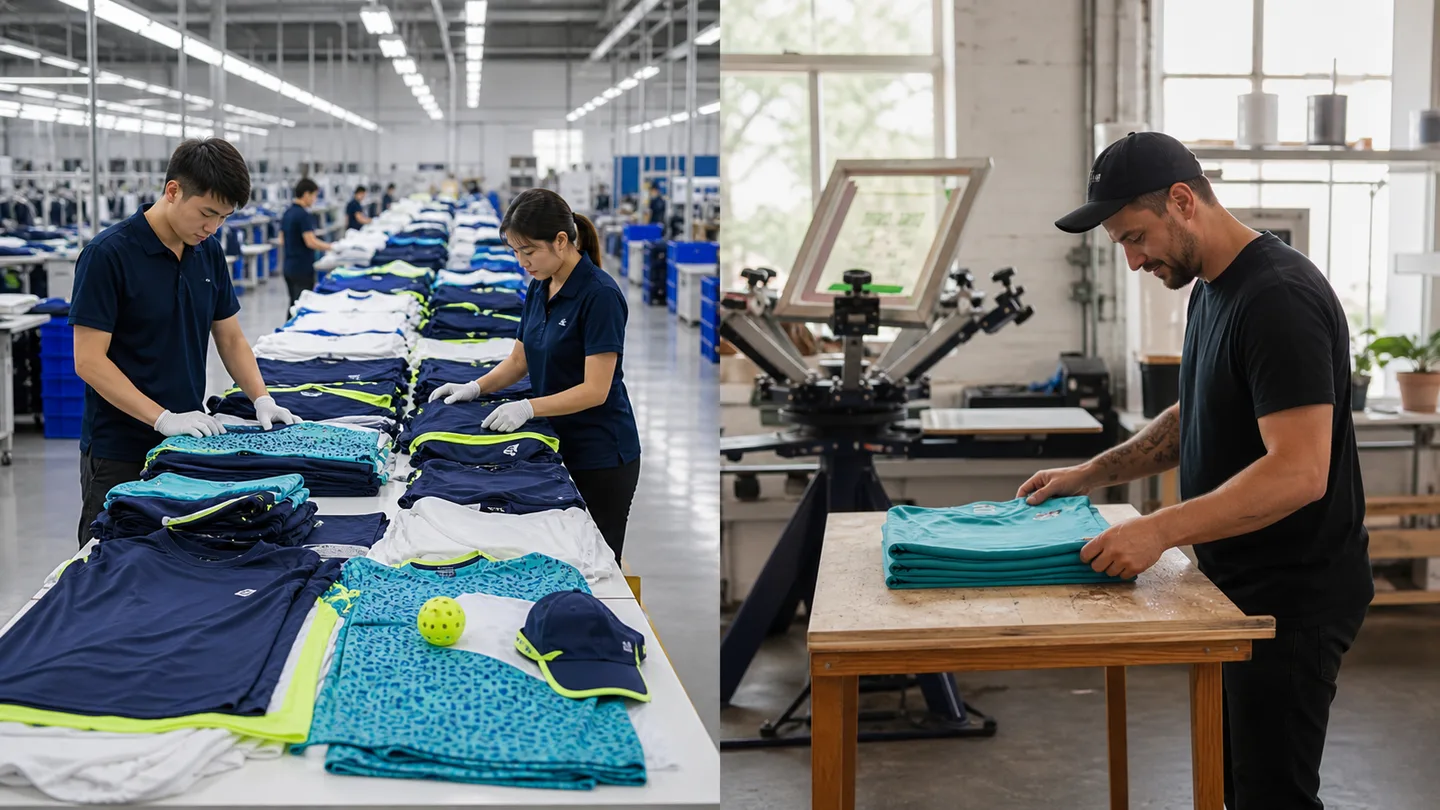
This is where process control shows. AX Pickleball draws on apparel manufacturing experience that began in 2008. A controlled press line, documented color target and approved sample help the first garment stay consistent with the rest of the run.
When Sublimation Isn’t the Right Call
I’ll be straight with you, because a good factory should tell you this rather than just taking the order. Sublimation isn’t perfect for every situation.
First, 100% cotton tees need another method, such as screen print or direct-to-garment printing. Second, short runs may fit a local decoration route better than a factory program; AX Pickleball’s suitable sublimated shirts start from 50 pieces per design. Third, approve strict brand colors on the selected fabric because screens, paper, ink, heat and the textile base all affect the result.
For almost every pickleball team, club, or tournament order, though, the tradeoffs land in sublimation’s favor. All-over designs, no per-color fees, breathable performance fabric, and a print that can’t crack. That’s a strong hand.
Getting It Right When You Order
If you’ve decided on sublimation jerseys, a few things will make your order come out better.
Get the artwork right the first time. Sublimation lets you do almost anything, which is a blessing and a trap. Busy designs look muddy from ten feet away. Keep sponsor logos legible, keep contrast high, and remember the design wraps around seams and edges, so leave some breathing room. A good factory’s design team will flag problems before printing – that’s part of what you’re paying for.
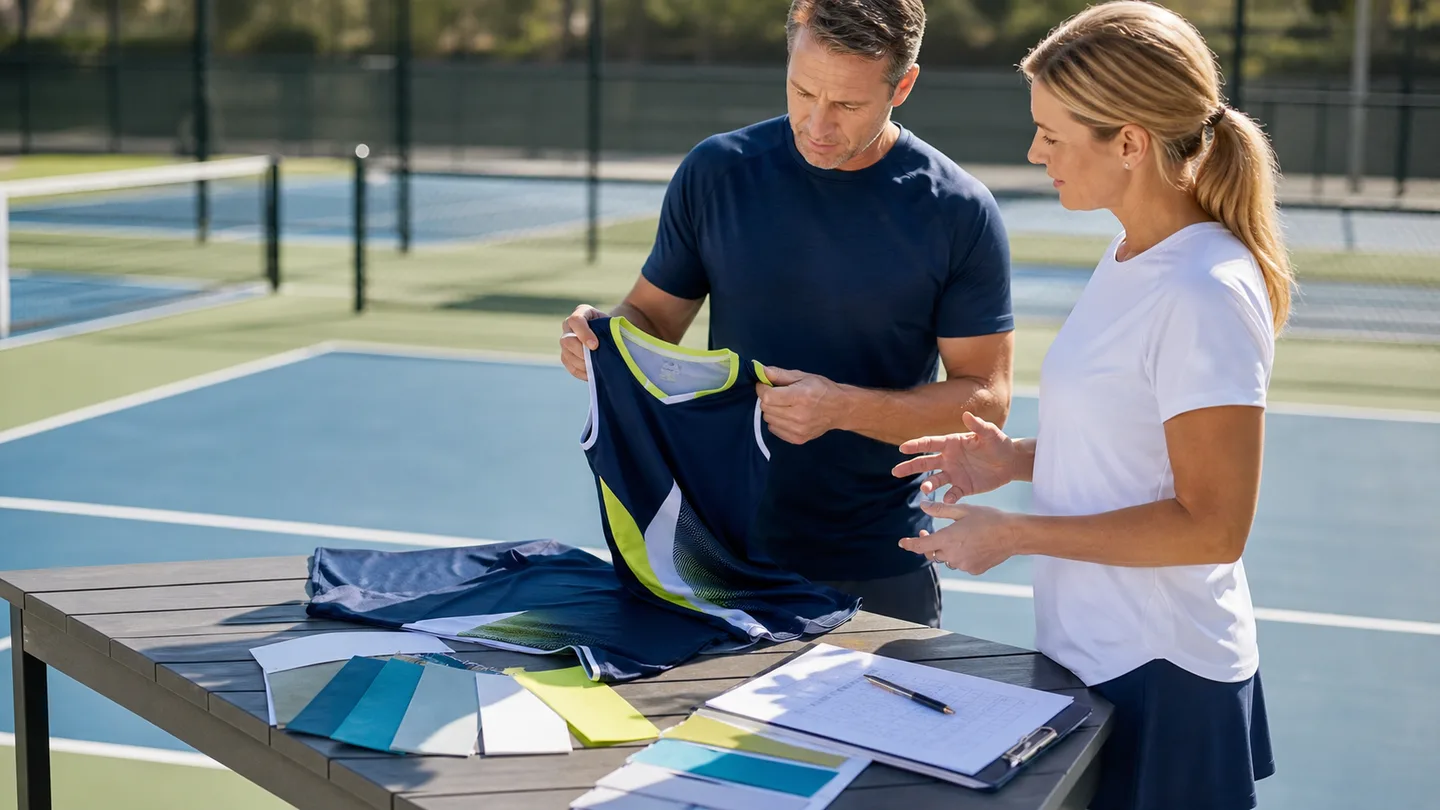
Ask for a pre-production sample. Before hundreds of shirts run, have the factory print one physical jersey in your actual fabric with your actual design, and approve it. Photos and digital mockups don’t catch everything. This one step prevents most of the “the color looked different in person” problems.
Record the approval, not just the garment. Keep the artwork revision, color reference, fabric code, size specification and dated sample photos together. That production record gives both sides a shared target during bulk inspection and future reorders.
Match the fabric to the season. Lighter weights for hot summer leagues, a touch heavier for cooler evening play. If you’re unsure, ask – a factory that only pushes one fabric is a red flag.
Plan for reorders. Once your design and color are locked and approved, reordering the same jersey later should be fast and consistent. Keep your artwork file and your approved sample reference handy, and your next season’s order is mostly a repeat.
Sublimation suits pickleball team programs because the color enters the polyester instead of adding a heavy print layer. The method alone does not guarantee quality: fabric, ink, press calibration, cutting, sewing and care all affect the finished garment. Review the custom pickleball shirts we produce, or contact AX Pickleball with your quantity, artwork and delivery market to plan a pre-production sample.