
Straight answer first: for polyester pickleball team jerseys, sublimation usually provides the most durable full-coverage decoration. Screen print still earns its keep, mainly for cotton or blended blanks, simple graphics and specialty finishes. The correct choice follows the fabric, artwork, quantity and care routine.
How Print Methods Work on Pickleball Team Jerseys
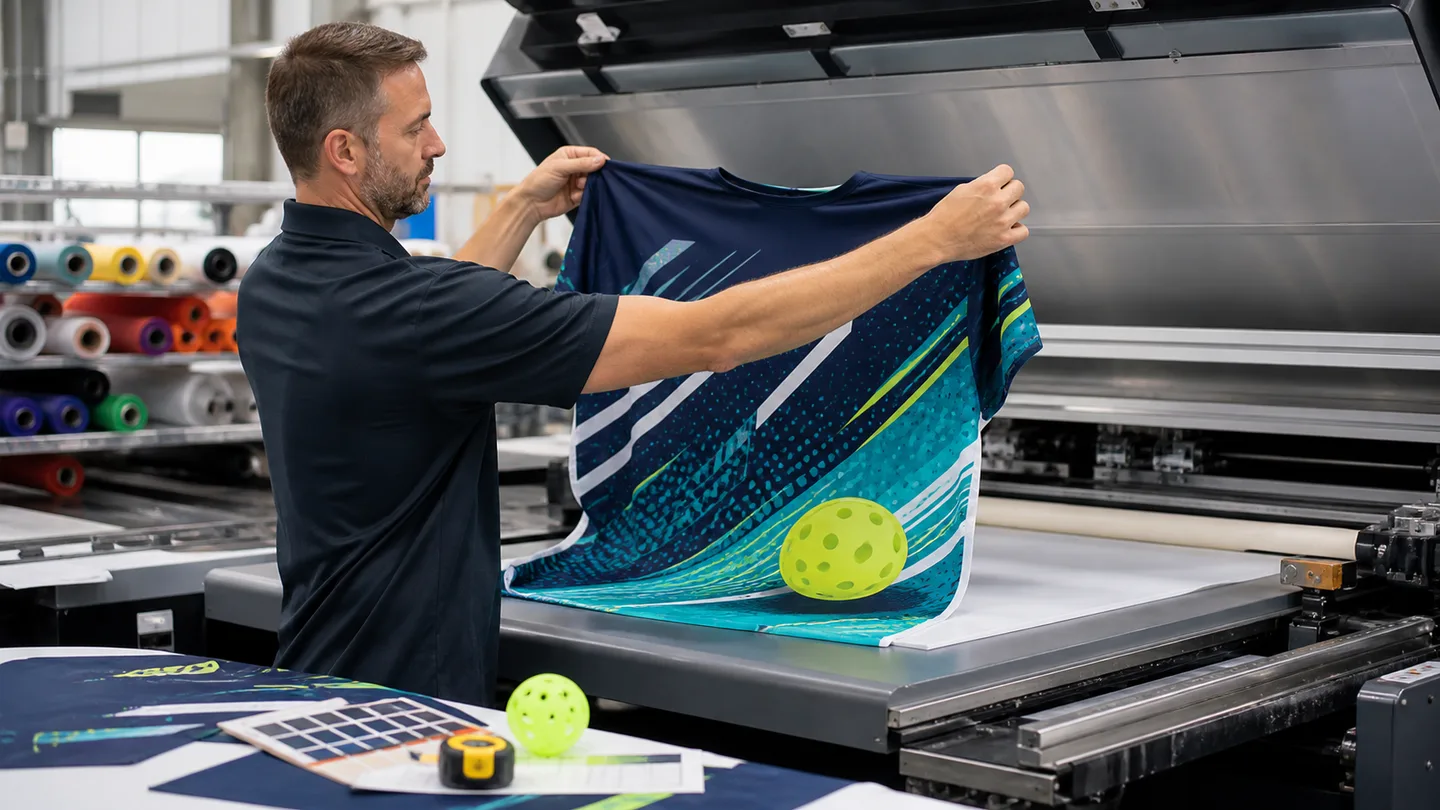
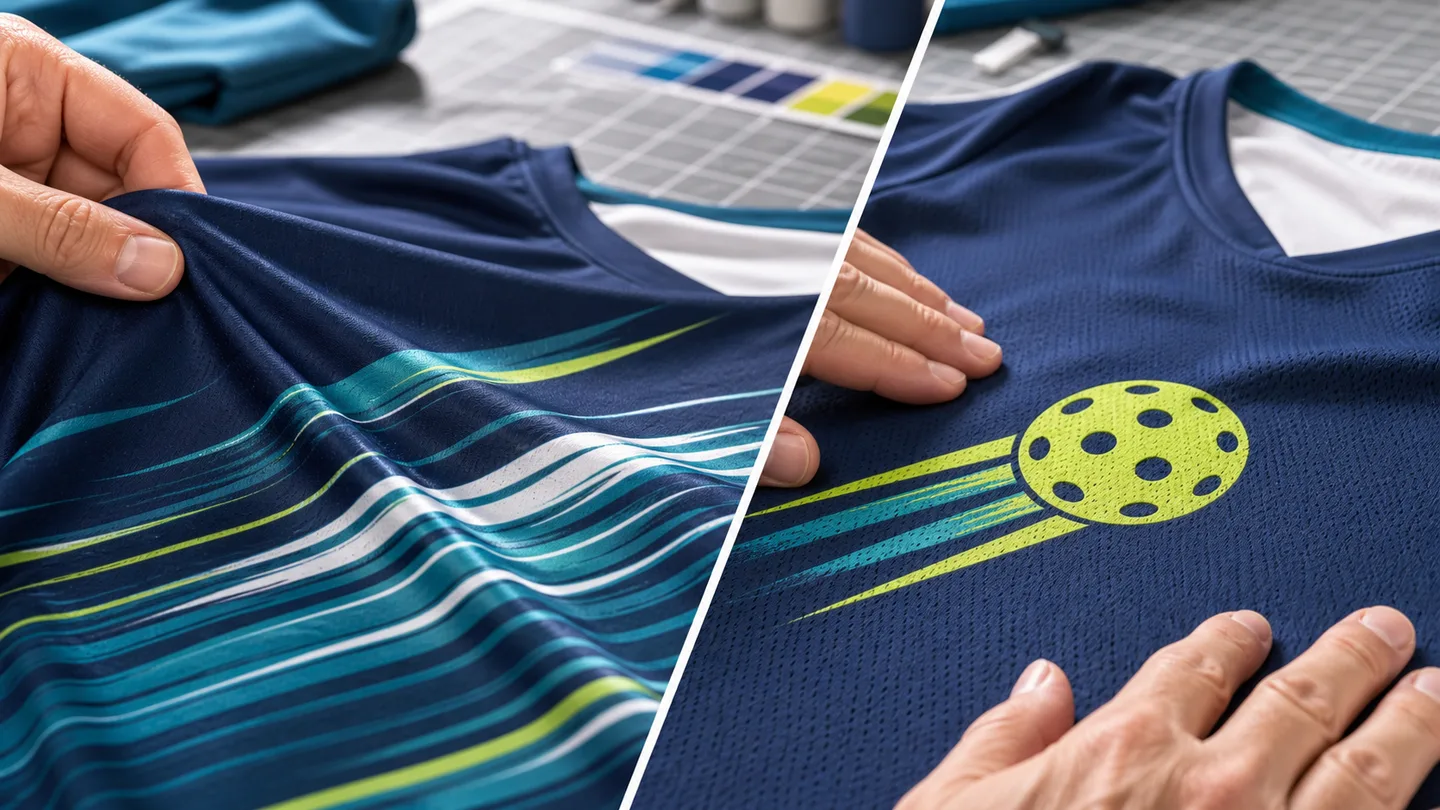
Sublimation isn’t ink sitting on top of the fabric. It’s a dye that turns to gas under heat and bonds into the polyester fibers themselves. The design becomes part of the shirt. You can’t feel it with your fingers, and it can’t crack – because there’s nothing on the surface to crack.
Screen printing pushes ink through a mesh stencil onto the fabric, one color at a time. The ink sits on the surface and gets cured with heat. It’s thicker, and it sits on top of the garment – which is why a screen-printed logo has that slightly raised, rubbery feel.
That single difference – dye inside the fiber vs. ink on the surface – explains almost everything else that follows.
Feel and Comfort on the Court
Pickleball is a sweat sport. You’re running, stopping, and reaching in direct sun, and the last thing you want is a heavy, stiff logo glued to your chest.
Sublimated jerseys stay completely smooth. The design adds zero weight and zero stiffness, so the shirt moves with you. Over a two-hour match, that matters more than people expect – a printed chest that doesn’t breathe becomes a hot, sweaty patch in the one place you notice it most.
Screen print adds a layer. A thin, well-printed layer is fine for a small chest logo, but large designs – especially across the back or the full front – can feel like a plastic patch that traps heat and refuses to stretch with the fabric. On a hot outdoor court, that’s not a minor detail.
The trade-off cuts the other way too. Screen print can create metallic, puff and high-density raised effects that sublimation cannot reproduce. It can also apply opaque white ink directly to a colored blank, while sublimated white details depend on leaving areas of a white base fabric unprinted.
Durability: What Fades, What Cracks
This is the actual question in the title, so let’s be specific about what “holds up” means for each method.
Sublimation fades slowly and evenly, and only after a lot of washing and sun. Because the dye lives inside the fiber, it doesn’t peel, chip, or crack – ever. The realistic risk is gradual fading over years, mostly from repeated hot washes and UV exposure. Wash cold and dry low, and a sublimated jersey looks close to new for a long time.
Screen print can crack or lose adhesion as the garment flexes and ages. Ink system, curing, print thickness, fabric stretch and care all affect the result, so a well-produced small chest print should not be judged by the same standard as a thick, low-quality full-front print.
One more factor pickleball buyers should weigh: the sun. Pickleball is played outdoors far more than most racket sports, and UV light is hard on both methods, just in different ways. Sublimation fades from the outside in as the dye breaks down under sunlight, and it does so evenly. Screen print’s ink can also fade and, worse, turn brittle and crack faster when it’s baked by the sun between games. If your team plays outdoors through the summer, that sun exposure is as much a durability test as the washing machine.
Here’s the side-by-side that matters:
| Factor | Sublimation | Screen Print |
|---|---|---|
| Where the design sits | Inside the fiber | On the surface |
| Feel | Smooth, zero hand | Slight to heavy raised feel |
| Cracking/peeling | Never | Possible over time |
| Fading | Slow, even | Can fade unevenly |
| White detail | Created by leaving the white base fabric unprinted | Opaque white ink can print on a colored blank |
| Special inks (metallic, puff) | No | Yes |
| Big all-over designs | Excellent | Poor to impossible |
For a team that plays twice a week and washes jerseys after every session, sublimation wins on durability. For a one-off event shirt in cotton, screen print is often cheaper and completely adequate – you don’t need five-year durability on a shirt worn once.
Design Freedom and Color
Sublimation prints the entire garment in one pass, which means the number of colors in your design doesn’t change the price. Two colors cost the same as twenty. You can run photos, gradients, fades, and all-over patterns that wrap the sleeves and side panels – things screen printing simply can’t do at team-run prices.
Screen print charges per color. Every additional color means another screen, another setup, another cost. Gradients and photos are hard to reproduce; you’re realistically limited to flat, solid shapes. That’s fine for a clean two-color logo, and it keeps the design tidy, but it’s a real ceiling if you want anything more ambitious.
Sublimation does not apply opaque white ink. Cut-and-sew sublimation normally starts with white or light polyester, then leaves selected areas unprinted to create white details while printing the surrounding area dark. Screen printing is the better route when the job requires opaque white ink on an already colored blank. Confirm the base fabric and construction before approving the artwork.
Cost, Minimums, and Turnaround
This is where the methods flip and screen print gets its moment.
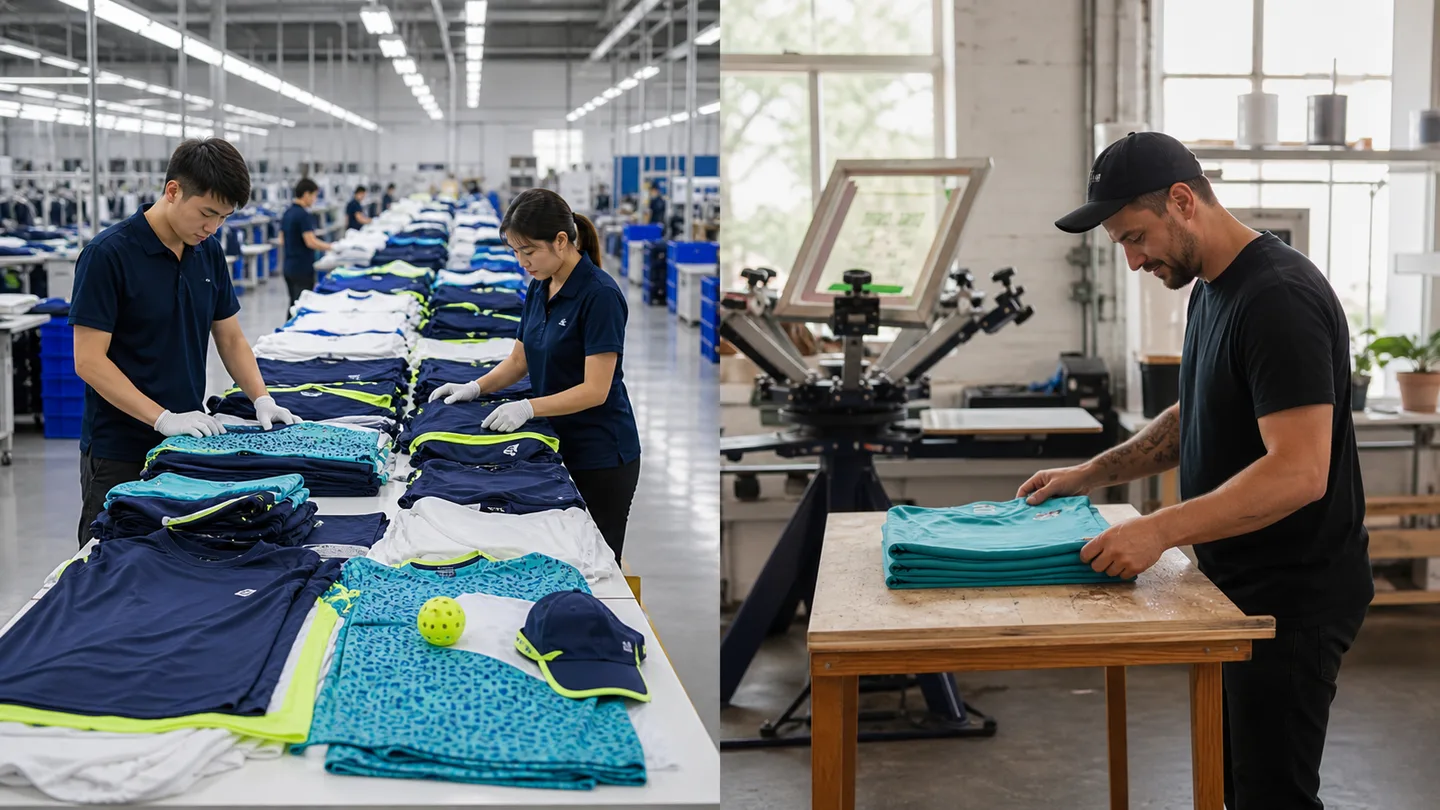
Screen printing requires a separate screen and setup for each color, so its economics improve as the same simple design repeats across more garments. For very short runs, a local shop may recommend heat transfer or direct-to-garment printing instead. The right comparison depends on the blank, number of colors, print locations and quantity.
Sublimation requires a full garment layout and transfer process, so it suits coordinated club and league programs. At AX Pickleball, suitable fully sublimated shirts can start from 50 pieces per design; fabric, construction and trim choices can raise the final minimum.
Turnaround is roughly similar for both once art is approved – the bigger variable is usually how fast your team approves the proof, not how fast the shop prints. And when you’re comparing quotes, ask both shops for a printed sample on your actual fabric. A side-by-side sample tells you more in five minutes than a week of spec sheets.
A useful way to compare isn’t the per-shirt quote alone – it’s cost per season. A slightly pricier sublimated jersey that survives three years of matches and washes is cheaper per season than a screen-printed shirt that needs replacing after one. If your team plays year-round, run that math before you pick the cheaper-looking quote.
Neither method is “better” in the abstract. Small run, simple logo, cotton – screen print. Polyester team set, complex design, heavy washing – sublimation.
Which One Should Your Team Pick?
If your pickleball team wears polyester and plays regularly, order sublimated jerseys. The durability and design freedom win, and the smooth, weightless feel matters more in the heat than most buyers realize.
If you’re doing a small run on cotton or a blend, or you need a specific screen-print finish – metallic, puff, white-on-dark – screen print is the right tool.
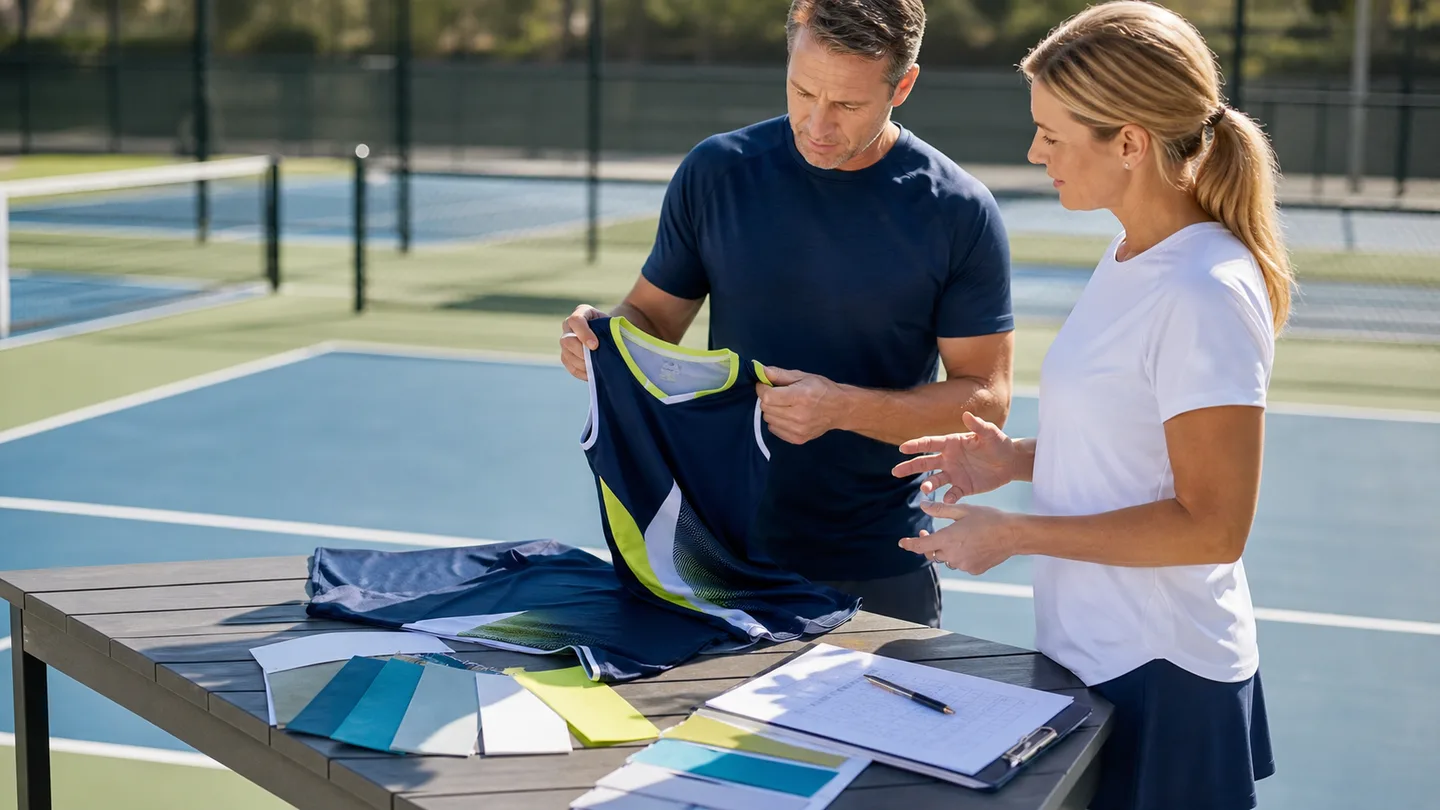
If you are unsure, ask the supplier to compare both methods against the same quantity, fabric, artwork and care requirements. The recommendation should follow the specification.
Once you choose a method, follow the custom pickleball jersey ordering process. The artwork decisions are covered in how to design custom pickleball shirts.
When you are ready to compare methods, contact AX Pickleball with your quantity, garment type, fabric preference and rough design. The team can assess both routes against the same specification.