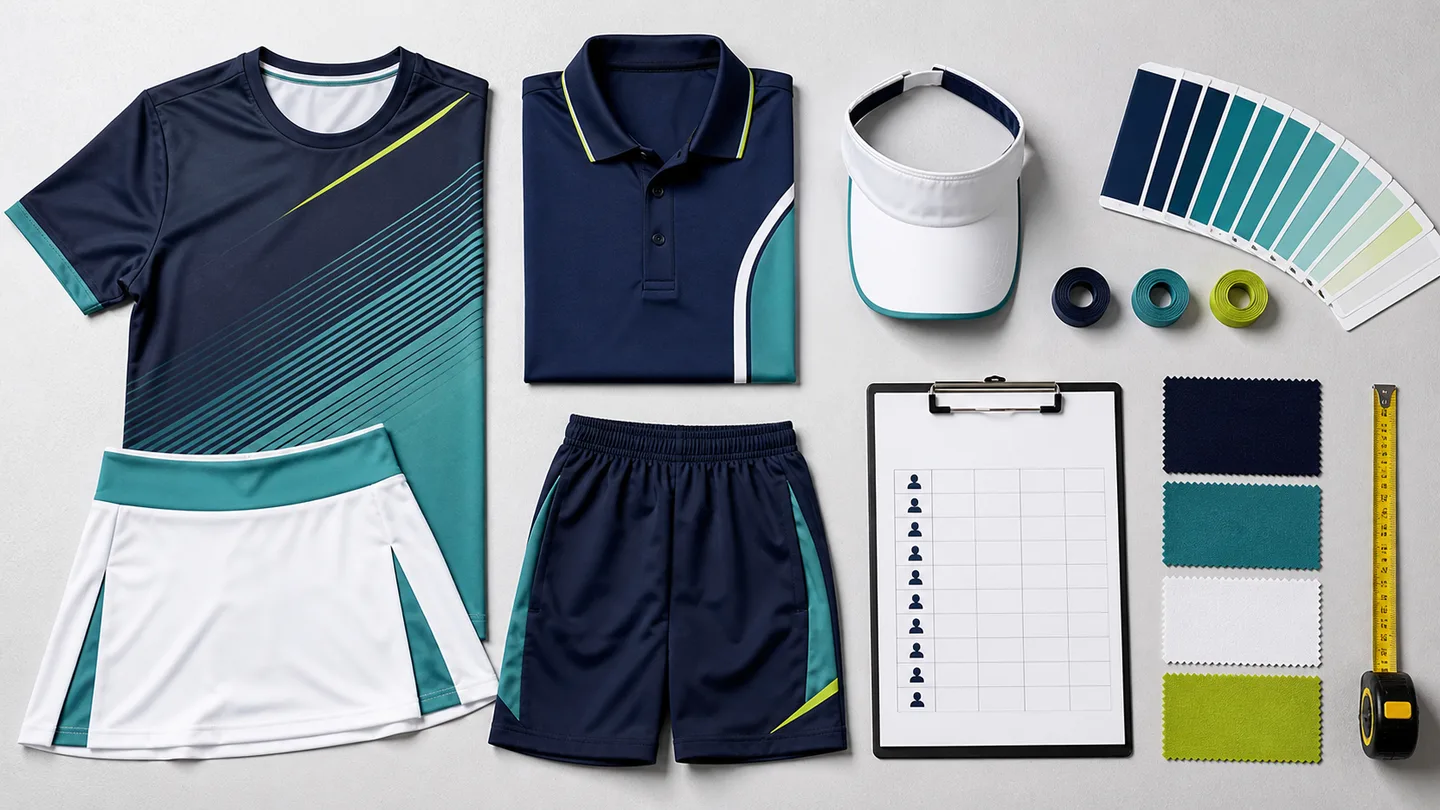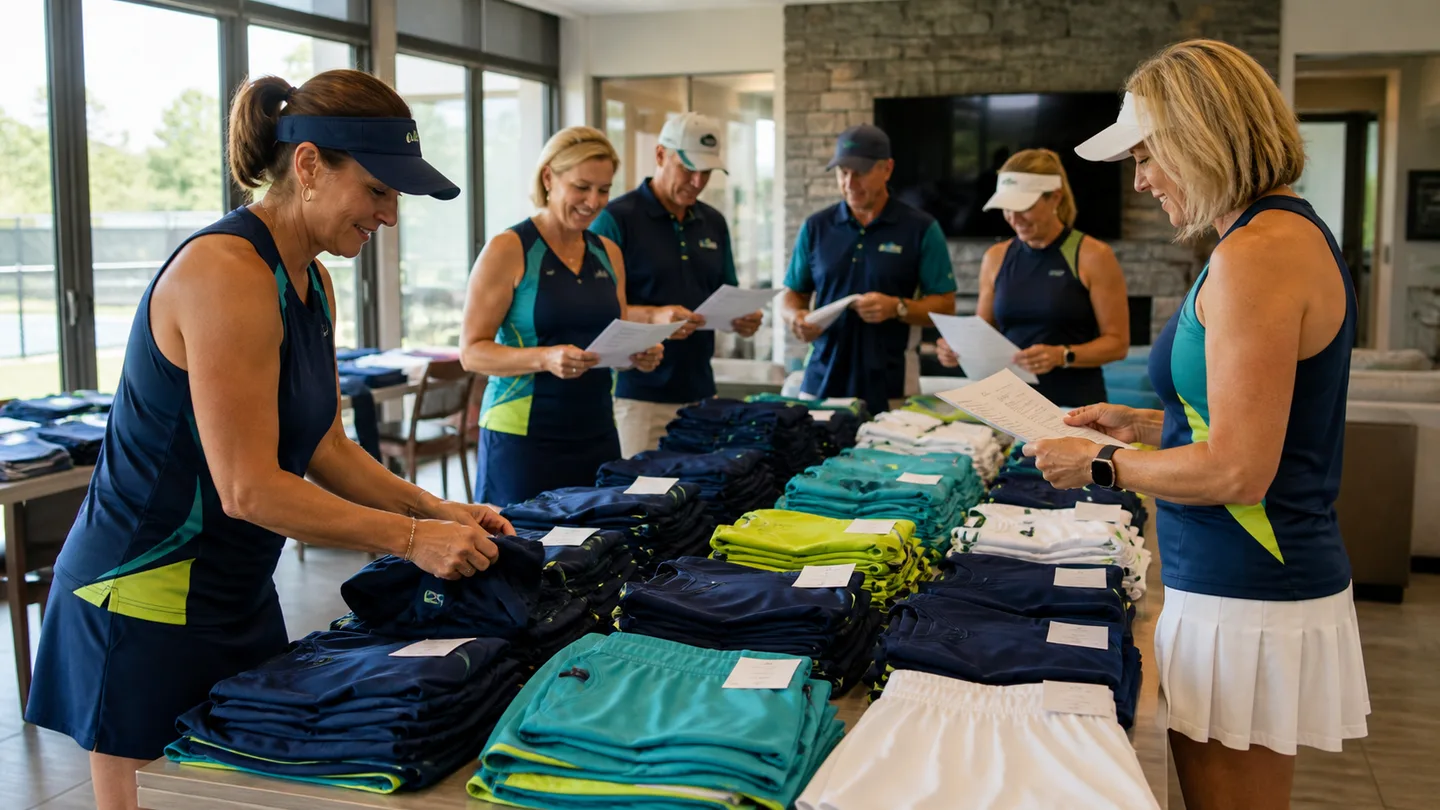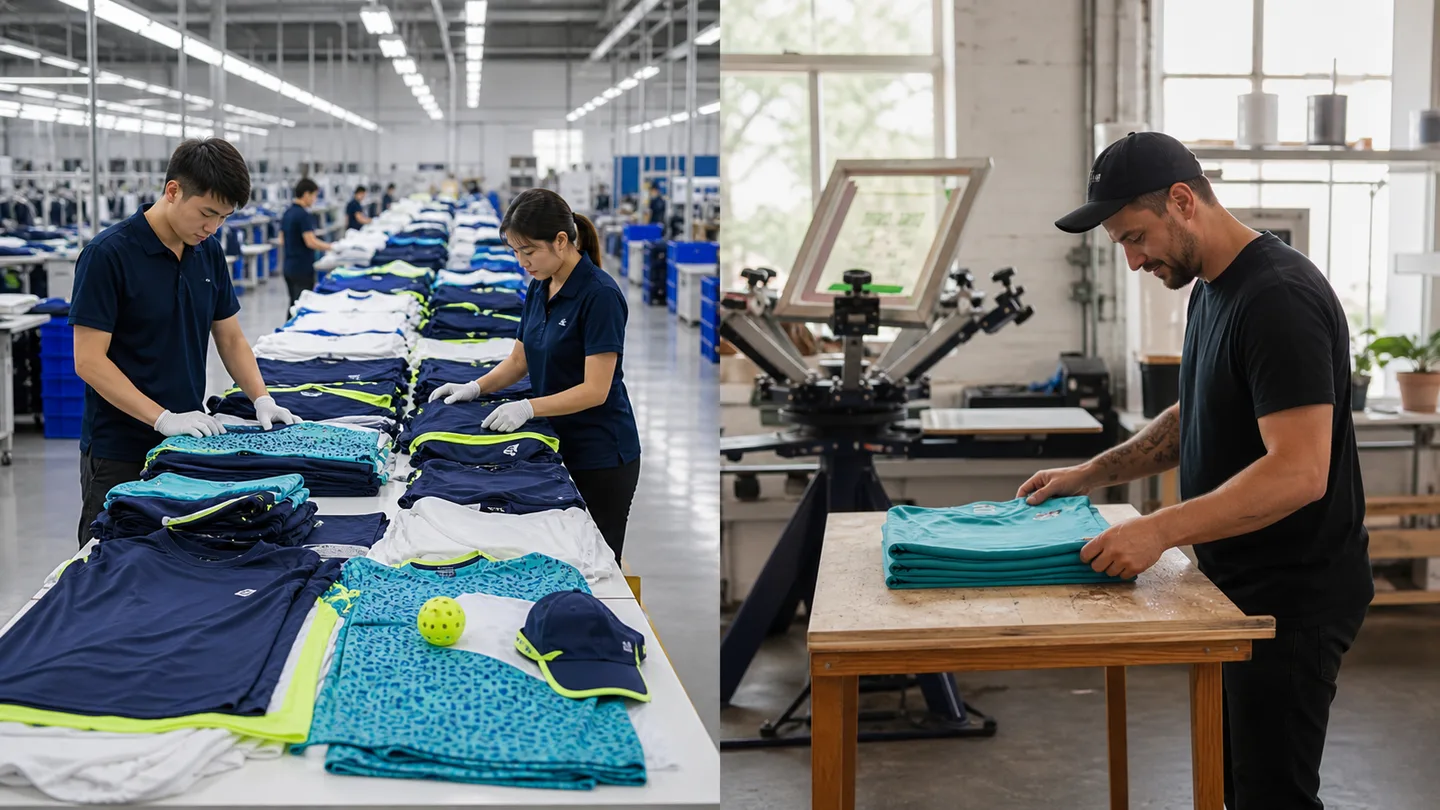

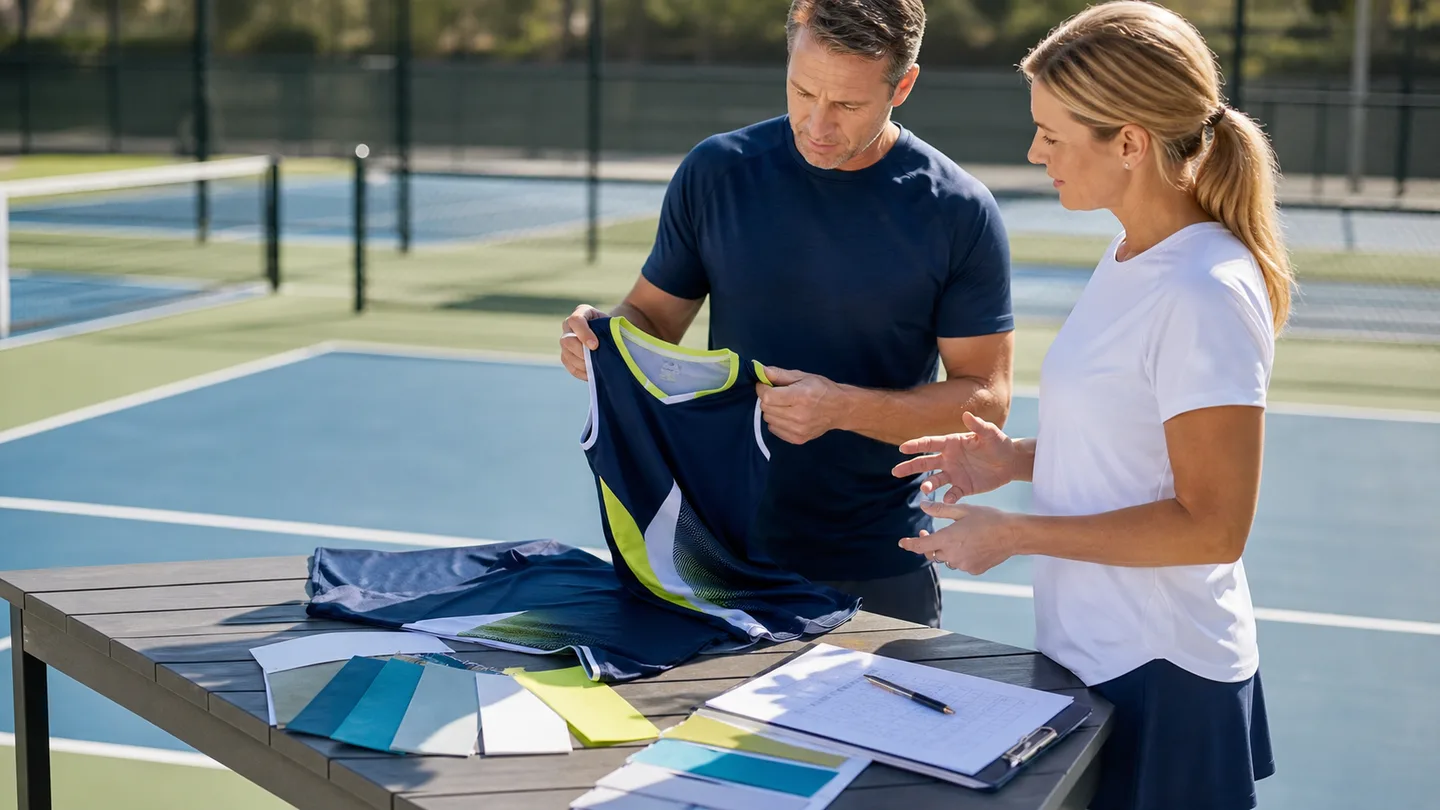
If you are ordering custom pickleball jerseys for a club, tournament or league team, lock the fabric, fit, artwork and sizing in that order. A digital mockup cannot rescue an unsuitable fabric or an untested size plan.
AX Pickleball draws on apparel manufacturing experience that began in 2008. The questions from clubs and event buyers remain consistent, so this article follows the order in which those decisions should be made.
Start Custom Pickleball Jerseys With Fabric, Not Flash
The most common mistake first-time buyers make is designing the artwork before they’ve picked the fabric. That’s backwards. The fabric decides how the jersey feels through a three-hour tournament, how it handles sweat, and how long the print lasts. The logo comes after.
For a fully sublimated pickleball jersey, start with a compatible polyester fabric. Polyester dries quickly and accepts disperse dye under heat. Cotton does not bond with sublimation dye, while a blended fabric only colors the polyester portion and usually produces a muted, heathered result. A properly sublimated design has no surface print layer to crack or peel.
On a quote sheet you’ll usually see a few polyester options:
| Fabric | Feel | Best for |
|---|---|---|
| 100% polyester interlock | Smooth, midweight | Most club and league jerseys |
| Polyester with mesh panels | Breezy, cooler | Hot-weather tournaments |
| Poly/spandex stretch | Tighter, athletic | Competitive teams wanting a performance fit |
You do not need to memorize these names. Tell the supplier whether the jersey is for indoor or outdoor play, summer heat or year-round use. A factory that develops the garment can then match the fabric to the brief.
If you are still weighing print methods, compare sublimation and screen printing for pickleball team jerseys.
One care note matters from the start: high wash and dryer temperatures can shorten the useful life of both the fabric and its trims. Tell players to follow the care label, wash cold when possible and avoid high dryer heat.
Get the Fit Right Before You Print
“Fit” means different things to different players, which is exactly why you should ask for a sizing spec sheet, not just a size chart.
A size chart gives you chest and length. A specification sheet adds sleeve length, shoulder width, collar construction and the intended ease. Pickleball rosters can span players who prefer a close athletic cut and players who need more room, so define the target fit before sampling.
Two tips that save a lot of back-and-forth:
- Ask for a blank sample before you commit to a full run. Most factories will send one in your target size for approval.
- If your roster skews older or bigger, order the relaxed cut and size up on the chest. A jersey that’s slightly loose gets worn. A jersey that’s too tight sits in a drawer.
Fit also changes the artwork. A logo that looks centered on a flat mockup can sit in the wrong spot once it’s stretched over a curved body. A good supplier checks placement against the actual garment pattern, not a flat JPEG. If they’re only showing you flat mockups, ask how they handle placement on the real thing.
Where Custom Pickleball Jersey Artwork Gets Decided
The artwork file, placement plan and proof determine whether the finished jersey looks coordinated or improvised.
You don’t need to be a designer, but you do need to send the right files. Factories want vector files – AI, EPS, PDF, or high-resolution SVG. They scale to any size without going fuzzy. If all you have is a photo or a PNG, send the highest resolution you can and expect a small fee to have it cleaned up or redrawn. That fee is worth it; it’s the difference between a crisp logo and a blurry mess.
For a closer look at fabric, fit, file setup and placement, see how to design custom pickleball shirts.
Things to check before you hit send:
- Spelling. Names, numbers, and sponsor text get misspelled constantly. Have two people read every word out loud.
- Contrast. A light logo on light fabric disappears. Your supplier should flag this, but don’t assume they will.
- Sponsor logos. If a local business is on the jersey, get the file directly from them – not a screenshot from their website.
Sublimation can cover the whole garment rather than a single logo area, and added colors do not require a new screen for each color. Artwork coverage can still affect paper use, setup and production efficiency, so compare the finished specification instead of assuming every all-over design costs the same.
Names, Numbers, and Embroidery
Here’s where the two main customization methods split, and it’s worth understanding the difference before you order.
Sublimation handles everything printed: logos, colors, gradients, all-over patterns, names, and numbers. It’s ideal when the whole jersey is one printed design.
Embroidery is for a different job. If you want a raised, textured logo – something that reads as “premium” from a few feet away – embroidery does what print can’t. It’s common on collars, sleeve patches, and chest marks, and it holds up beautifully to washing.
The catch is that embroidery and sublimation don’t always play well in the same small area. A thick embroidered patch over a busy sublimated design can look cluttered. The fix is simple: keep embroidery for clean, solid logos and small accents, and let sublimation carry the big visuals. Tell your supplier which parts matter most to you, and they’ll lay it out so the two methods complement each other instead of fighting.
Sizing Across a Whole Roster
Sizing 12 identical jerseys is easy. Sizing 40 players from XS to 3XL is where orders go wrong.
Ask your players for two numbers: their usual t-shirt size and their chest measurement. The chest measurement is the one that matters, because “large” means different things across brands. If you can’t measure everyone, collect current jersey sizes from whatever sport they played before – tennis and golf sizes transfer reasonably well to pickleball cuts.
Then decide whether to hold spare stock in the most common sizes. Players get added and jerseys get lost, but unused inventory also costs money. Compare a small reorder with a measured contingency quantity before finalizing the roster.
One more call to make on purpose: unisex vs. men’s/women’s cuts. If you’ve got a mixed roster, unisex is cheaper and simpler to manage, but women’s cuts fit many female players noticeably better. There’s no wrong answer – just make the choice deliberately instead of defaulting.
How Long It Takes, and What to Send
Here’s the part nobody plans for: timeline. A custom jersey order isn’t instant, and the bottleneck is usually approval, not production.
A typical flow looks like this: you send artwork and sizes, the factory sends a digital mockup, you approve it, production runs, and the box ships. Production is often the fastest step. The waiting usually happens while teams debate the design or collect payments from players.
To keep things moving, come prepared with:
- Final artwork in vector format (or your best available file)
- A complete roster with sizes and spelling-checked names and numbers
- One decision-maker who can approve the mockup
- A ship-by date, worked backwards from your first tournament
If you have all of that ready before you contact a supplier, you can cut weeks off the process. It’s the single biggest time-saver in the whole order.
Ready to order? Start with the fabric, not the logo.
Custom pickleball jerseys that fit and last aren’t luck – they’re a sequence. Fabric first, fit second, artwork third, sizing fourth, and a supplier who asks you the right questions at every step.
If you have a roster, a rough design idea and a tournament date, contact AX Pickleball. Share the expected quantity, size range and delivery market so the team can recommend a practical fabric, sample and MOQ route.