
Custom pickleball skirts need three things: fabric with controlled stretch and moisture management, sizing that serves the range of bodies on the team, and construction that stays comfortable through court movement. Color and logos come after those fundamentals.
Skirts are the part of a women’s team kit that causes the most back-and-forth, and usually for reasons that have nothing to do with style. Fit complaints, ride-up, see-through fabric, waistbands that dig in – these are construction and sizing issues, and they’re avoidable if you know what to ask for. This guide is written for the person who has to order skirts for a whole team and doesn’t want to field complaints all season.
Choose the Silhouette for Custom Pickleball Skirts
Before choosing fabric and colors, decide which garment you are ordering. The three common options serve different needs.
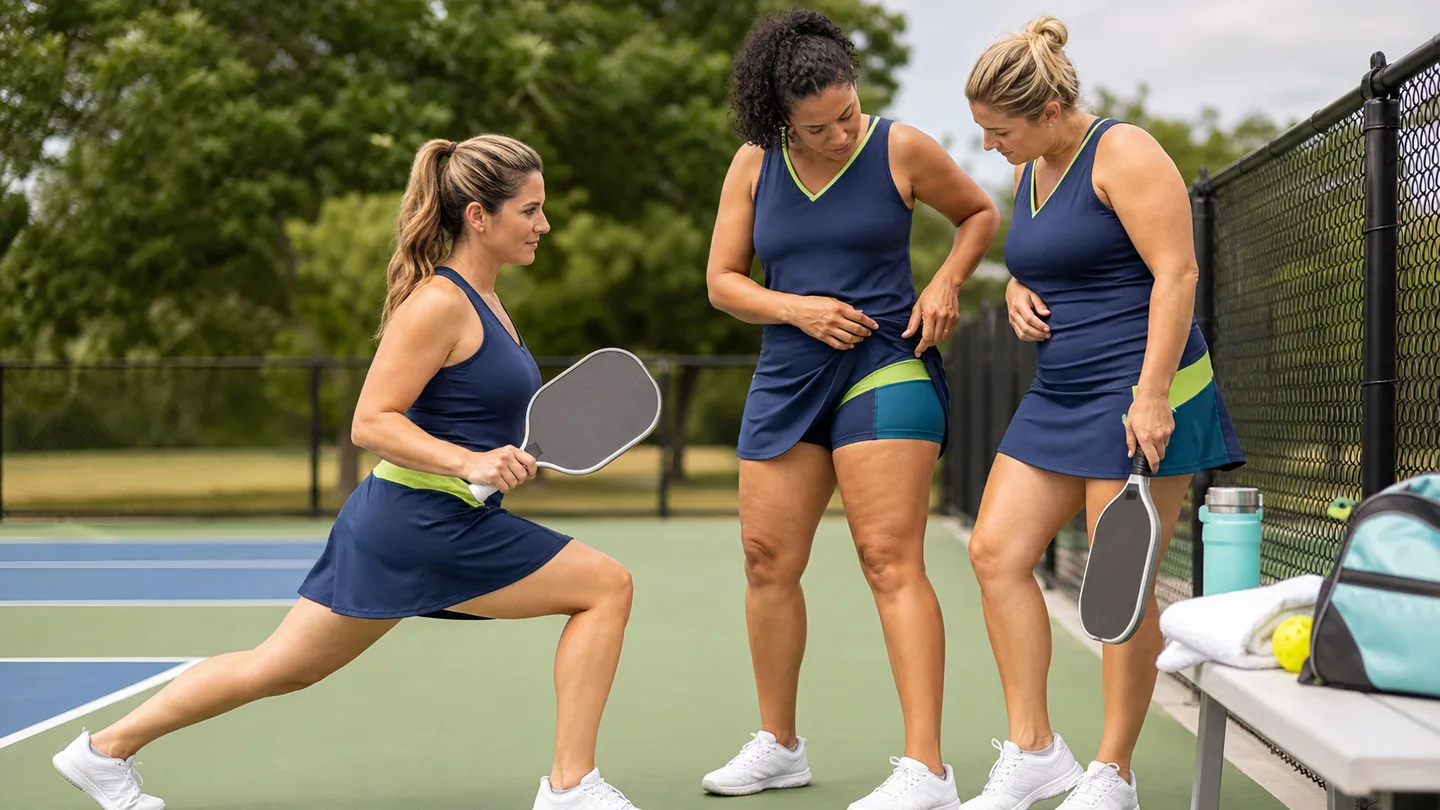
A skort is a skirt with built-in shorts underneath. It is a common choice for competitive play because players can move freely with reliable coverage. The inner short may include a pocket for a spare ball during practice or for a small personal item off court, but pocket placement should never restrict movement.
A standalone skirt without shorts means players layer their own shorts or briefs underneath. It can be cooler and lighter, and some players prefer it, but you’ll get questions about coverage during play, so it’s a choice to make deliberately rather than by accident.
A dress or one-piece combines the top and skirt. It’s popular for some women’s teams because it’s one garment to design and it looks polished in photos, but it’s harder to get the fit right across body types because you’re fitting the top and bottom together.
For many teams, a skort is the practical starting point because it combines coverage and movement in one garment. Ask your supplier to show how the inner short attaches, whether the leg opening needs a gripper and where any pocket sits.
Fabric and Construction: What Keeps a Court Skirt Comfortable
Court skirts need to do two things at once: stretch with fast movement and stay put. The fabric and the construction are equally responsible for each.
Look for a knit with four-way stretch, meaning it stretches lengthwise and crosswise and then recovers. A fabric that stretches but bags out is less useful than one with controlled stretch and strong recovery. Handle swatches and test a finished sample before approving the team order.
Moisture-wicking matters just as much as it does for tops, but it’s easier to get wrong on a skirt because some suppliers use heavier, less breathable knits for bottoms. A skirt that doesn’t breathe gets clammy fast on a hot court. Lightweight, breathable, quick-drying – same checklist as a good polo, applied to the bottom half.
Construction details to check:
- The waistband should be wide and soft, not a thin elastic that digs in. A wide, smooth waistband is one of the biggest comfort upgrades you can make and one of the easiest to overlook.
- The hem shouldn’t have raw, scratchy edges against the legs.
- The inner short should be separate from the outer skirt so the two can move independently – a skirt that’s stitched to the shorts in the wrong places pulls and twists.
- Seams should lie flat. Bulky seams on the inner thigh area cause chafing over a long tournament day.
We also look at how the skirt responds to repeated washing because team gear is laundered often. Follow the care label, avoid unnecessary heat and check whether the waistband, inner short and outer shell recover together after washing.
Sizing for a Women’s Team: The Part Most Orders Get Wrong
Here’s the pattern we see constantly: a team places an order using a generic size chart, the skirts arrive, and half the players are between sizes or the fit runs differently than expected. Skirt sizing is less forgiving than top sizing because there’s no looseness to hide a bad fit.
The single most useful thing you can do is get a sample set in a range of sizes and have players try them on before you commit to the bulk order. Not everyone will do it, but the players who do will save you a pile of exchanges later.
Ask your supplier for a size chart that’s specific to the skirt you’re ordering, not a generic apparel chart. Waist and hip measurements matter more than a letter size, and good manufacturers can tell you whether a given style runs true, small, or large. We keep sizing notes on every style we make precisely so we can warn a customer “this one runs slightly small, order up” before they spend money.
If your team spans a wide range of sizes, ask about extended sizing rather than squeezing everyone into a limited range. A women’s team is rarely a uniform body type, and a supplier that only offers a narrow size run is a supplier that’s going to force some of your players into a bad fit.
Design and Customization: Matching Your Team Without the Fade
The fun part – colors and logos – is also where teams accidentally create problems for themselves down the line.
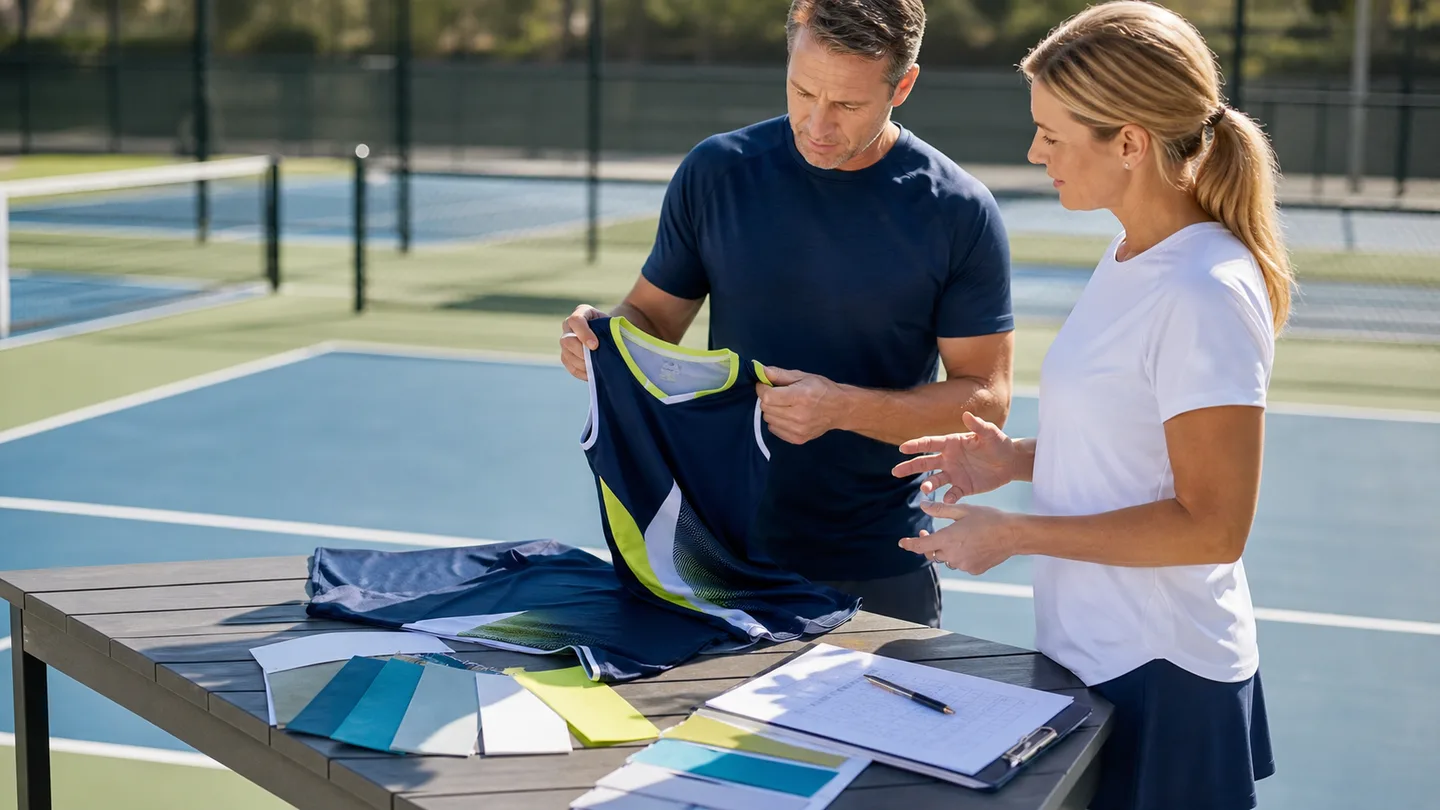
Color is the first decision. If your club already has colors, you want the skirt to match the top, which means the dye has to be consistent across garments made at different times. That’s harder than it sounds with synthetic knits, which is why we keep color standards and dye lots on file for repeat customers. Ask your supplier how they handle color matching across reorders, because a slightly-off skirt next to an older top is obvious in team photos.
Placement matters for logos. On a skirt, the common spots are the hem, the side, or the waistband. Logos at the hem look clean but can distort when the fabric stretches, so they often work better as a small print or embroidery rather than a large graphic. Side placement is visible in most photos and less affected by movement.
Decoration method follows the same logic as tops. The pickleball polo shirt article compares embroidery, printing and transfer, but every method still depends on the selected fabric, artwork and application quality. A skort’s constant stretch makes sample testing especially important.
One thing specific to skirts: the inner short. If you want your logo or a team name printed on the inner short leg, that’s doable and popular for some teams, but it wears differently than the outer fabric, so confirm with your supplier how that decoration holds up.
Ordering Custom Skirts: Questions to Ask Your Factory
When you are ready to order, run through this list with the supplier. The answers will show whether the team understands court-apparel construction or is only reselling generic activewear.
Ask about the inner short construction and whether the ball pocket is standard. Ask for a sample in your actual size, not a showroom sample. Ask whether they offer extended sizing and how the style runs. Ask how they handle color matching on reorders. And ask what the realistic lead time is for a custom color and logo, because custom dye and custom decoration both add time versus an off-the-shelf color.
Most importantly, tell them who’s wearing the skirts and how. A women’s tournament team playing outdoors all summer has different needs than a casual club playing indoors twice a week. A factory that asks you questions about your players is a factory that’s thinking about fit, and that’s the one you want.
If you are putting together a women’s team kit, contact AX Pickleball with the expected quantity, size range, preferred silhouette and delivery market. For the wider team-set process, see the pickleball uniform builder checklist.