
If you are outfitting a club or tournament, judge pickleball polo shirts on three things: fabric that manages moisture and keeps its shape, a cut that allows full shoulder movement, and decoration suited to the fabric and care routine. A logo alone cannot compensate for weak material or a restrictive pattern.
Most people buying team polos start with the logo and work backwards. That’s understandable, but it’s also how you end up with a box of shirts nobody likes. A polo for pickleball isn’t the same as a polo for the office or even the golf course, and the differences matter more than people expect. This guide walks through what we look at as a manufacturer when a customer asks us to build a pickleball polo line, and what you should be asking your supplier before you commit to an order.
Why Pickleball Polo Shirts Differ From Golf Polos
On paper, they look like the same garment. Collar, two or three buttons, short sleeves. But the way a pickleball player moves is different from the way a golfer moves, and the conditions are different too.
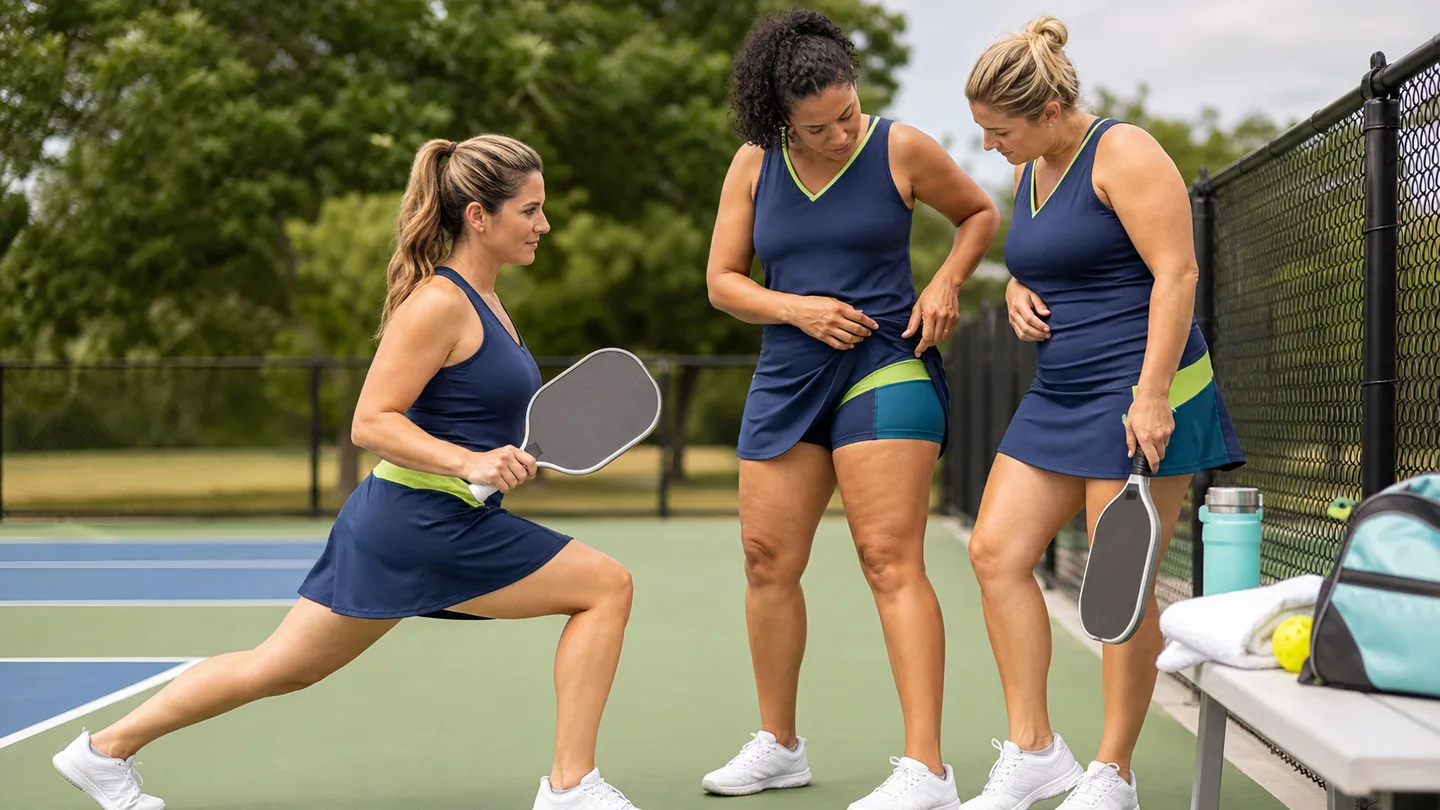
Pickleball is played on a hard court, usually outdoors, often in full sun. Points are short and explosive. You’re lunging, bending, reaching low for dinks, and pivoting constantly. A golf polo is designed for a relatively calm, upright swing. A pickleball polo has to handle more range of motion and more direct contact with sweat and sun.
Practically, that means a few things at the pattern level. The shoulder and armhole need a bit more room so the sleeve doesn’t bind when you reach across your body. The back often benefits from a vent or a lighter mesh panel because that’s where players sweat first. And the hem should stay put when you lunge – a shirt that rides up every time you bend for a drop shot gets annoying fast.
None of this requires a radically different garment. It’s still a polo. But the small differences in cut and paneling are what make a player reach for one shirt over another in their bag. If your supplier only makes corporate polos, these details may not occur to them, and you’ll get a shirt that looks right in photos and feels wrong by the third game.
Fabric Requirements for Court Play
Fabric is where most buyers get talked into things they don’t need, or talked out of things they do. Here’s what we tell customers to focus on.
First, moisture management is non-negotiable for court play. A cotton-heavy polo soaks up sweat, gets heavy, and clings. Polyester knits with a wicking finish move sweat off the skin and dry quickly. But not all polyester is the same – a cheap, stiff poly feels like a plastic bag, while a good one has a soft hand and some mechanical stretch.
Second, weight matters. A lighter, airy knit works better for hot outdoor tournaments. But go too light and the shirt turns see-through when wet and won’t hold embroidery well. There’s a middle ground, and a factory that makes athletic apparel will have options to show you rather than one generic “performance fabric.”
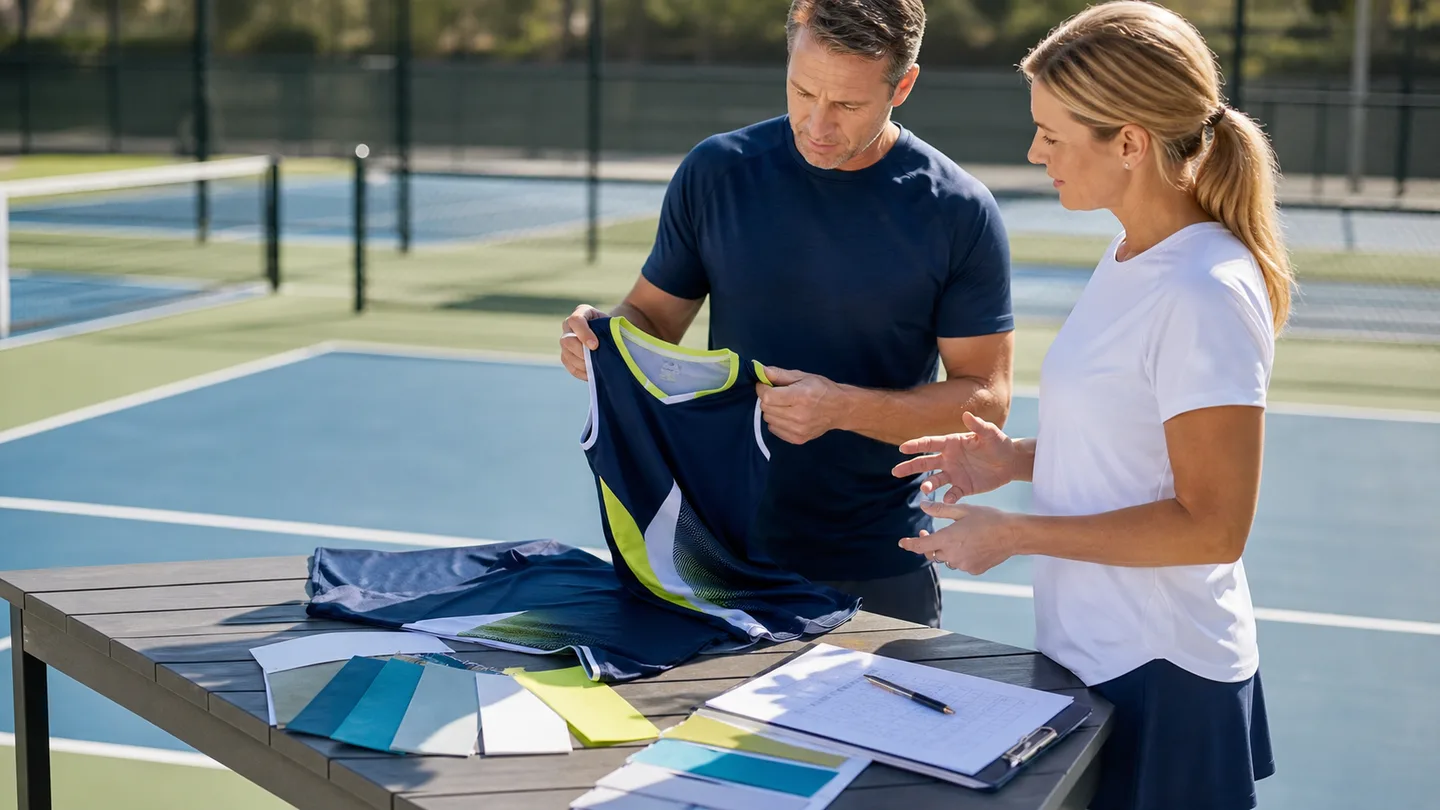
Third, evaluate how the shirt ages. Players wash their kit often, so pilling, collar recovery and dimensional stability matter. Ask for samples and run care tests before approving bulk production. A physical swatch also reveals hand feel and opacity that a photo cannot show.
| Fabric Attribute | What to Look For | What to Avoid |
|---|---|---|
| Moisture handling | Polyester knit with a wicking finish | Heavy cotton that holds sweat |
| Weight | Light-to-mid weight for outdoor play | Ultra-thin that goes sheer when wet |
| Stretch | Mechanical or added stretch for range of motion | Stiff weave that binds at the shoulder |
| Durability | Tight knit that resists pilling and holds collar shape | Loose knit that pills after washing |
One more note on fabric: sun exposure is real for a sport played outdoors all day. We don’t quote a UPF number unless a fabric has been tested and certified, but it’s worth asking your supplier whether a fabric carries any UPF certification if your players are going to be on court for hours in summer.
Fit and Cut: Room to Swing, Not to Swim
Fit is the second-biggest source of returns and complaints after fabric, and it’s usually because the shirt was sized for a different sport or a different body type.
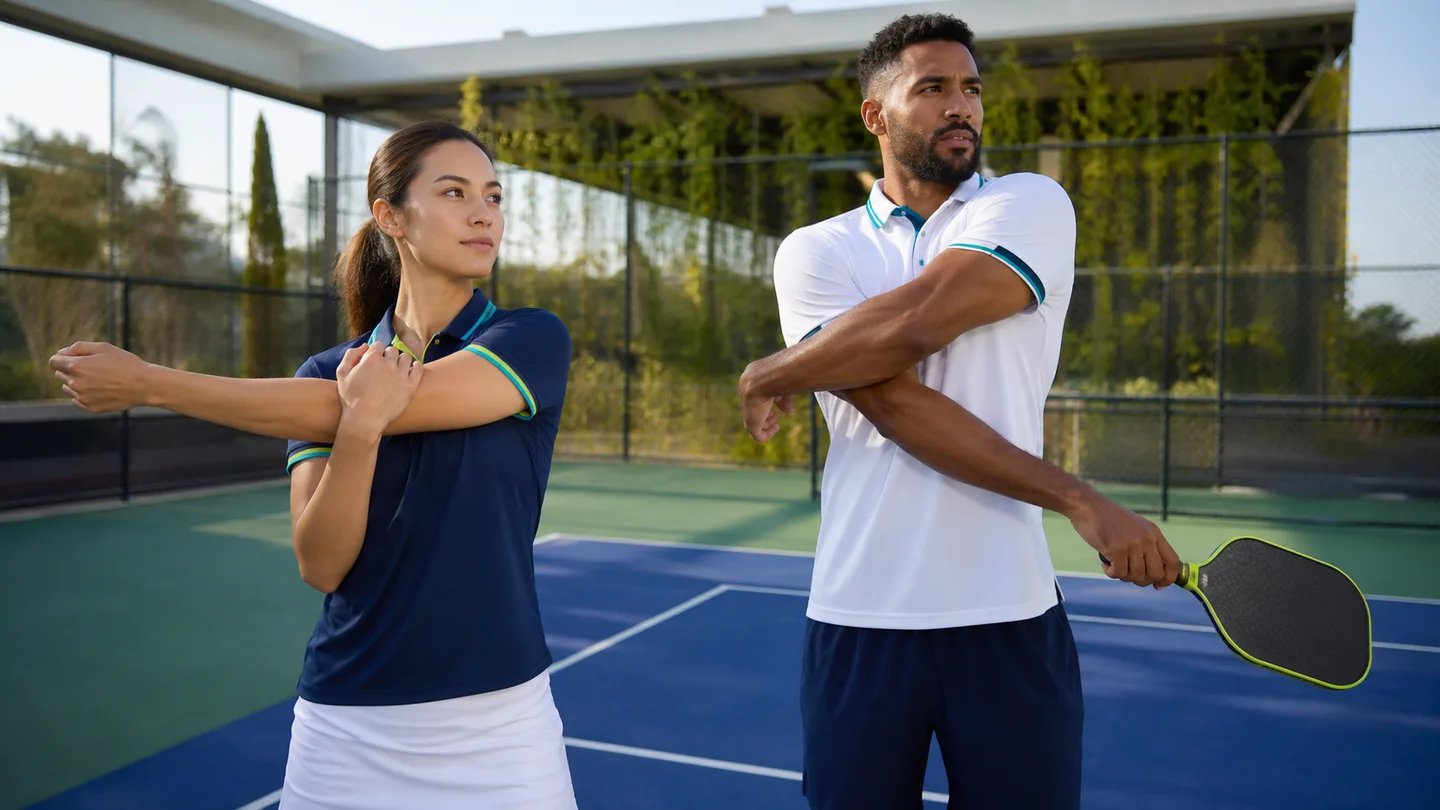
The goal for a pickleball polo is what we call an athletic-but-not-tight fit. Players want shape so they don’t look like they’re wearing a sail, but they also want to forget they’re wearing a shirt while they play. Too slim and the buttons pull when you swing. Too boxy and it flaps around and looks untucked and sloppy in team photos.
A few specifics worth checking:
- The shoulder seam should sit roughly at the shoulder bone, not halfway down the arm.
- There should be enough room in the armhole that a full reach across the body doesn’t tug the whole shirt.
- The body length should stay put when you bend – a hem that’s slightly longer in back helps here.
- Collars should lay flat. A curled collar after a few washes is a classic sign of cheap ribbing.
For team orders, the real challenge is that your group spans multiple body types. Ask which sizes the specific pattern supports and whether the men’s, women’s and unisex blocks use distinct measurements. A unisex shirt is practical for some groups, but a dedicated women’s block can give players a better choice than a scaled-down men’s cut. Custom pickleball skirts and skorts cover the bottom-half fit decisions for a coordinated women’s kit.
Customization That Doesn’t Crack or Peel
This is the part everyone thinks about first, so let’s give it proper attention. Customization on a polo usually comes down to a logo and maybe a name or number, applied by embroidery, screen printing, or heat transfer. Each has tradeoffs.
Embroidery creates a raised finish and is a common choice for a left-chest club logo. Its durability depends on thread, stitch density, backing, fabric and care. Dense embroidery on lightweight fabric needs suitable stabilization, and small text can lose legibility.
Screen printing is cheaper per unit and great for larger graphics, but it sits on the surface of a knit and can feel stiff or crack over many washes if it’s not done right. It also works best with flat, simple designs.
Heat transfer gives you full-color detail cheaply, but it’s the least durable of the three and can peel at the edges after repeated hot washes. We generally steer polo customers toward embroidery for the chest mark and reserve transfers for inside-neck labels or short-run promotions.
Whatever method you choose, ask your supplier how the decoration is tested. A good factory will wash-test decorated samples and be honest about what holds up. If a supplier promises “photo-quality” everything with no caveats, that’s a flag. There’s no single decoration that’s right for every logo and every fabric.
Ordering Polo Shirts in Bulk: What a Factory Needs From You
Since you’re probably ordering for a club, a tournament, or a resale line, let’s talk about what makes a bulk order go smoothly versus what makes it stall.
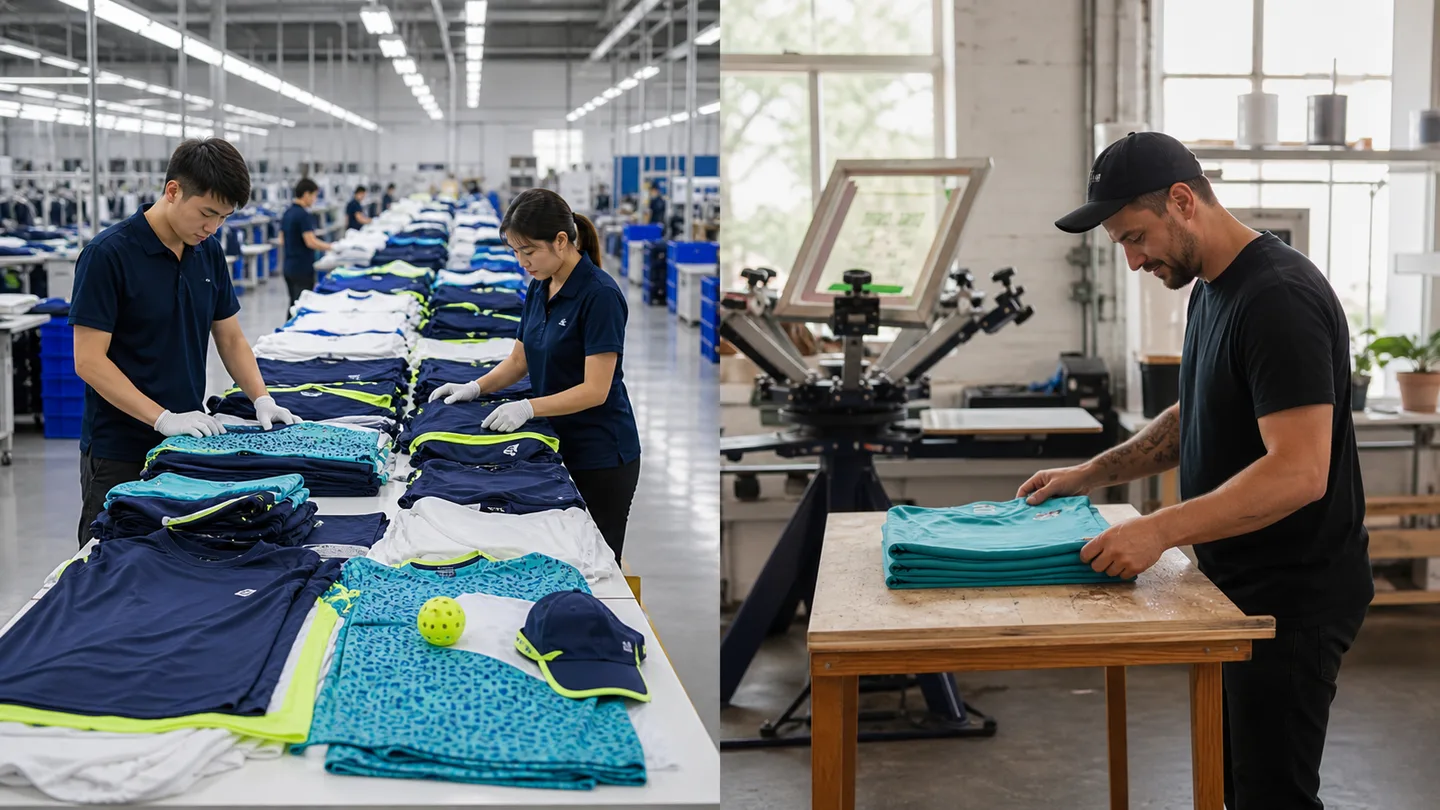
The first thing we need is a clear idea of your quantity and your timeline. That sounds obvious, but a surprising number of orders start with “we need shirts for an event” and no date. Lead times depend on fabric availability, decoration complexity, and how busy the production line is, so tell your supplier your event date up front and work backwards from there.
Second, lock the design before you lock the order. Changes mid-production are where mistakes and delays come from. Get your logo in a vector file (AI, PDF, or SVG), decide on placement and size, and confirm thread or ink colors against a physical sample, not a screen.
Third, think about sizing spread before you order. A common mistake is ordering equal numbers of every size when your actual group skews one way. Ask your players their sizes, or better, get a sample set and have people try them on.
Finally, build in a buffer for reorders. Clubs grow, players lose shirts, new members join. A good manufacturer will keep your color and logo on file so your next order matches the first one exactly – same dye lot if possible, same decoration spec. That consistency is worth more than people realize when your team shows up to a tournament looking identical.
If you are ready to review fabrics, fits and decoration for a club or event, contact AX Pickleball. The team draws on apparel manufacturing experience that began in 2008 and can recommend a practical sample and MOQ route. For complete kits rather than polos alone, use the pickleball uniform builder checklist.