
Pickleball team wear becomes a logistics project as soon as one person owns the order. Product mix, sizes, artwork authority, budget, delivery and late roster changes all need decisions. This workflow gives a club or league coordinator a clear path from brief to distribution.
Step 1: Define the Pickleball Team Wear Order
Before anything else, decide what “team wear” means for your group, because it changes everything downstream.
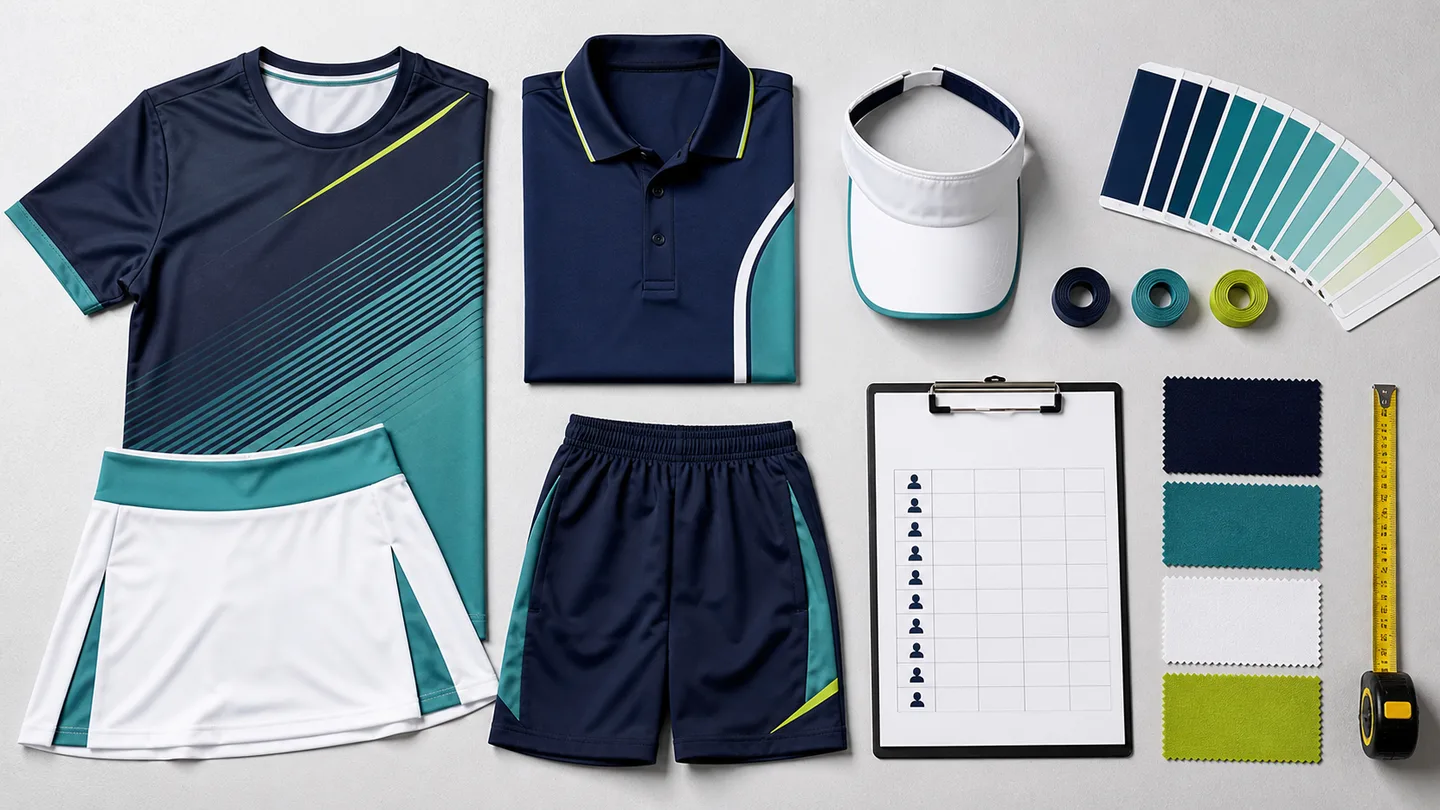
A uniform is the matched kit everyone wears to compete – jerseys (and usually a matching bottom or shorts). A team package often bundles a jersey with a practice shirt or a hoodie for cooler evenings. Fan or spirit gear is the stuff for supporters and families: tees, hats, bags. Clubs often order all three, but they shouldn’t be treated as one line item, because they have different fabrics, different quantities, and different price points.
Write down, per item: what it is, roughly how many, and who it’s for. This becomes your order skeleton and keeps the quote from turning into a guessing game.
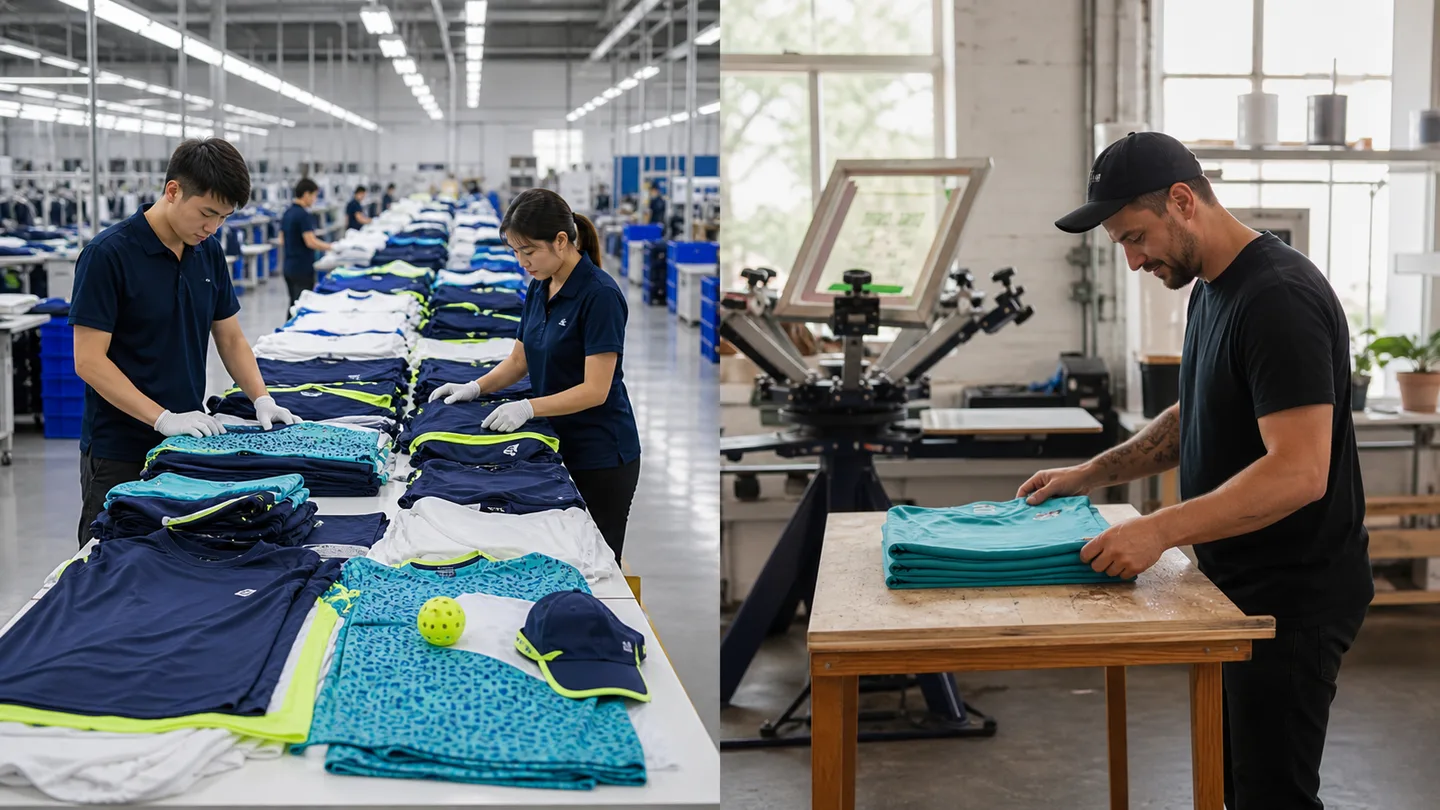
Also decide on a look before you decide on a supplier. An all-over sublimated jersey with sponsor graphics needs a supplier equipped for garment sublimation, while a simple one-color mark on a cotton tee needs a different process. Matching the supplier to the decoration method saves time. Clubs that need full-coverage color, names, numbers and sponsor graphics often choose sublimated performance jerseys; see how pickleball sublimation jerseys are produced before choosing the method.
Step 2: Get the Size Mix Right (This Is Where Orders Go Wrong)
The most common team-wear disaster isn’t a bad design. It’s a bad size mix. You order what you think the team needs, and you end up with five leftover smalls, no larges, and three players who can’t wear their shirts.
Don’t guess. Send around a simple size chart and have people give you their actual measurements or, better, their shirt size in a brand they already own. Then build a size breakdown from real responses, not from “they’re all probably mediums.” If you have past seasons’ data, use it – last year’s mix is the best predictor of this year’s.
Set a deliberate contingency quantity. Shirts get lost and new players may join mid-season, but the right buffer depends on roster turnover, storage space and budget. Compare the cost of a small reorder with the cost of carrying unused stock instead of applying one percentage to every club. The custom pickleball team shirt cost article explains the variables.
Step 3: Artwork and Approvals
This is the step that eats the most calendar time, so start it early.
Gather the assets. Team name, logo file (vector if you have it – AI, EPS, or a high-res PDF), sponsor logos, and any color preferences. Sponsors are the usual holdup: their logo files live with someone who takes a week to find them. Chase those down first.
Know your colors. If your club has official colors, get the actual values – a Pantone number or a photo of the correct shade – not “blue, like, royal blue.” Colors on screens lie, and “royal blue” means different things to different people.
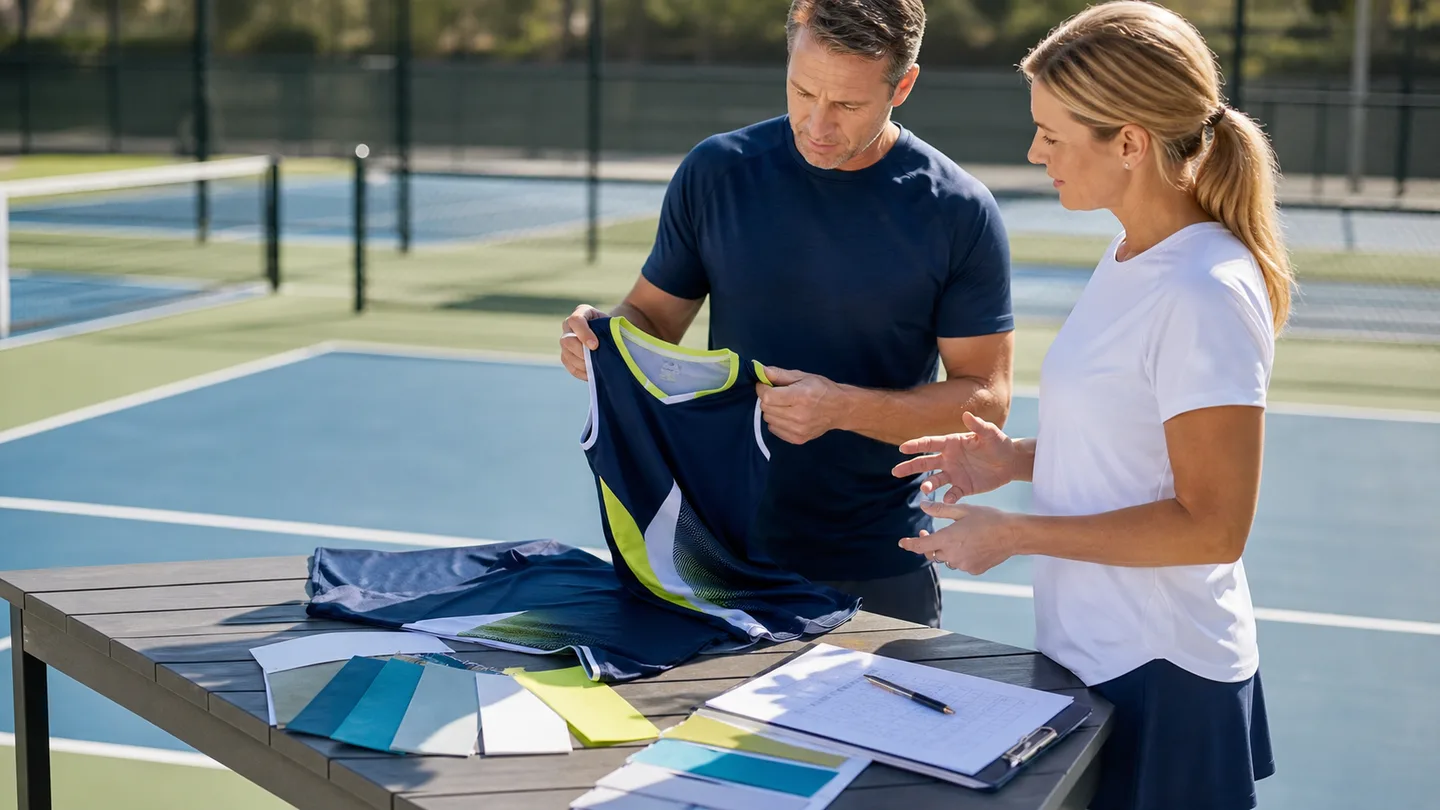
Approve a physical sample. This is the single most valuable step in the whole process. A digital mockup looks different from a printed shirt, every time. Have the factory print one jersey in your real fabric and design, look at it in person, and only then green-light the full run. It adds a few days and a small cost, and it prevents the classic “the logo printed smaller than I expected” argument after two hundred shirts are already made.
Get written sign-off from the person with final authority before the run starts. One owner should release the approval instead of leaving production with a committee.
The Mistakes That Delay Almost Every Order
Team-wear delays can start with an incomplete buyer brief, a late approval, a production issue or a shipping change. The planning problems below are the ones a club coordinator can control before the purchase order is released.
Starting with a vague idea instead of a spec. “We want blue shirts with our logo” isn’t enough to quote or produce. You need a design, an approximate quantity, a size breakdown, and a deadline. You don’t need all of it finalized on day one – a good supplier will help you fill in the gaps – but the more you have, the fewer rounds of back-and-forth eat your calendar.
Waiting on one person. It’s almost always a sponsor with a logo file, or a club officer who needs to approve the design. Chase these down early and set a hard internal deadline. The sponsor logo is the single most common reason a production run gets pushed back.
Changing the design after the sample. Every change after approval restarts some part of the clock and often adds cost. That’s the whole point of the sample: get everything right before you approve it, because after approval, changes are expensive.
Forgetting the extras. Players who join late, sizes you under-ordered, the hoodie order for the family section, the coach who needs a different color. Plan for these in the first order rather than as an afterthought, because a small add-on order later is the most expensive way to buy shirts.
Underestimating shipping. Production finishing on time is only half the story; the shirts also have to get to you. If you’re ordering from an overseas factory, freight adds days or weeks on top of production. Ask for the full timeline including shipping before you commit to a delivery date.
None of these are exotic problems. They’re just the ordinary friction of coordinating a group, and building a little buffer for them is cheaper than rushing any of them at the end.
Step 4: Timing and Lead Times
Work backwards from the date you need the shirts in players’ hands, not the date of the first match.
A custom order normally has four phases: artwork finalization, pre-production sample, production and shipping. Each has its own clock, and the duration changes with fabric availability, construction, quantity, revision rounds, capacity, destination and shipping method. Ask the supplier for a dated plan built around the approved specification rather than relying on a generic lead-time claim.
The full timeline should include development, approvals, bulk production, inspection and delivery. Add a documented buffer for late sponsor files, incomplete size surveys, design revisions and transport uncertainty. Ask for dates against your actual specification rather than copying a schedule from another order.
One more timing note: factories get busy in predictable waves. Spring and early fall, when everyone is ordering for a new season, are peak times. Ordering in the off-season can get you faster turnaround and sometimes better attention. If your league runs in summer, ordering in early spring beats ordering in late spring.
Step 5: Budget and Consolidate
We covered pricing in detail elsewhere, but the ordering principle is this: consolidate into as few orders as possible.
Consolidating compatible items can reduce repeated setup and freight, but only when the same design, fabric and schedule truly apply. Ask the supplier to compare one consolidated order with staged deliveries and planned reorders. Keep the approved sample and production specification so later pieces can be matched as closely as available materials allow.
Budget for the landed cost, not just the unit price: garments, decoration, artwork work, samples, packaging, freight, applicable duties and contingency stock. Decide how the club will collect payment and approve spend before releasing the order.
Step 6: Distribute and Close the Loop
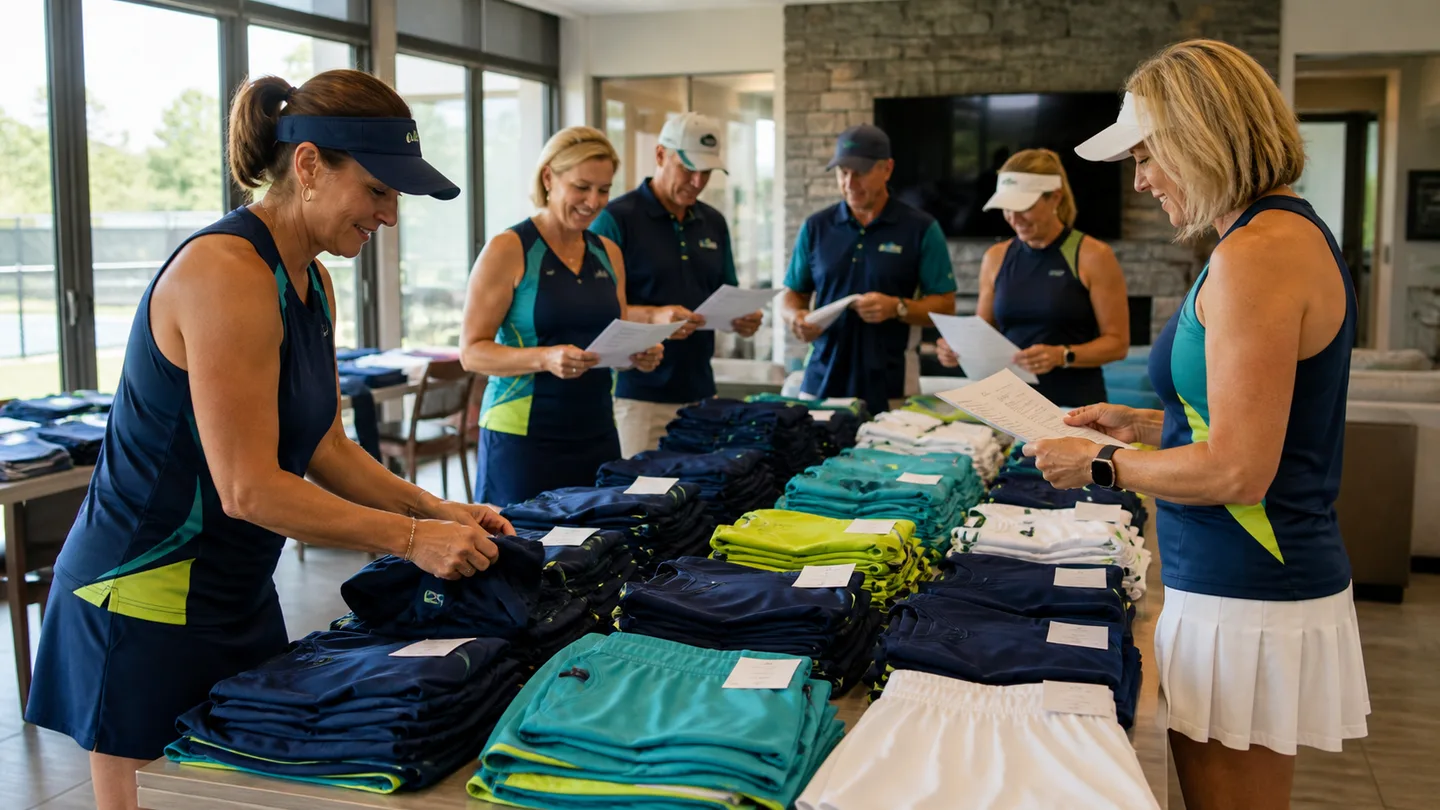
The order isn’t over when the box arrives. Sort by size, check the count against your order, and spot-check a few shirts against the approved sample for color and print quality. Flag anything wrong immediately – the sooner a factory knows, the easier a fix is.
Hand out shirts against the size list and record what remains as spare inventory. Keep extras organized by size, then store the artwork and approved-sample reference in a shared location that the next coordinator can retrieve.
Ordering team wear for a club or league is mostly a logistics job with a design decision bolted on. Lock the look early, get real sizes, approve a physical sample, order in one consolidated batch with a little overage, and build buffer into the timeline. Do those things and the shirts show up right, on time, and everyone matches. Skip any one of them and you’ll feel it.
If you are preparing an order for a club or league, review AX Pickleball’s custom pickleball T-shirts and related teamwear categories. Then contact the team with the product mix, quantity, size range and destination to build a practical sample and delivery plan.